
1,300 Words / 5 min. Read
There’s a quote from Nassim Nicholas Taleb that we keep coming back to here:
Invest in preparedness, not in prediction. Remember that infinite vigilance is just not possible.1
That must have been kicking around in our heads when we came up with the tagline: We can't predict the future, but we can prepare for it.
In an era of increasing uncertainty, this principle cuts to the core of how we can best leverage our time and resources to build resilience. So how can we put it to work in the context of climate change? And how do we weigh the benefits of risk projections against the chance they may be wrong?
The Limits of Prediction
This past decade has seen big advancements in climate and risk modeling.2,3 From US National Climate Assessments4 and IPCC emissions scenarios,5 to private-sector solutions like First Street,6 ClimateCheck,7 and Fathom,8 we have a wealth of data at our fingertips.
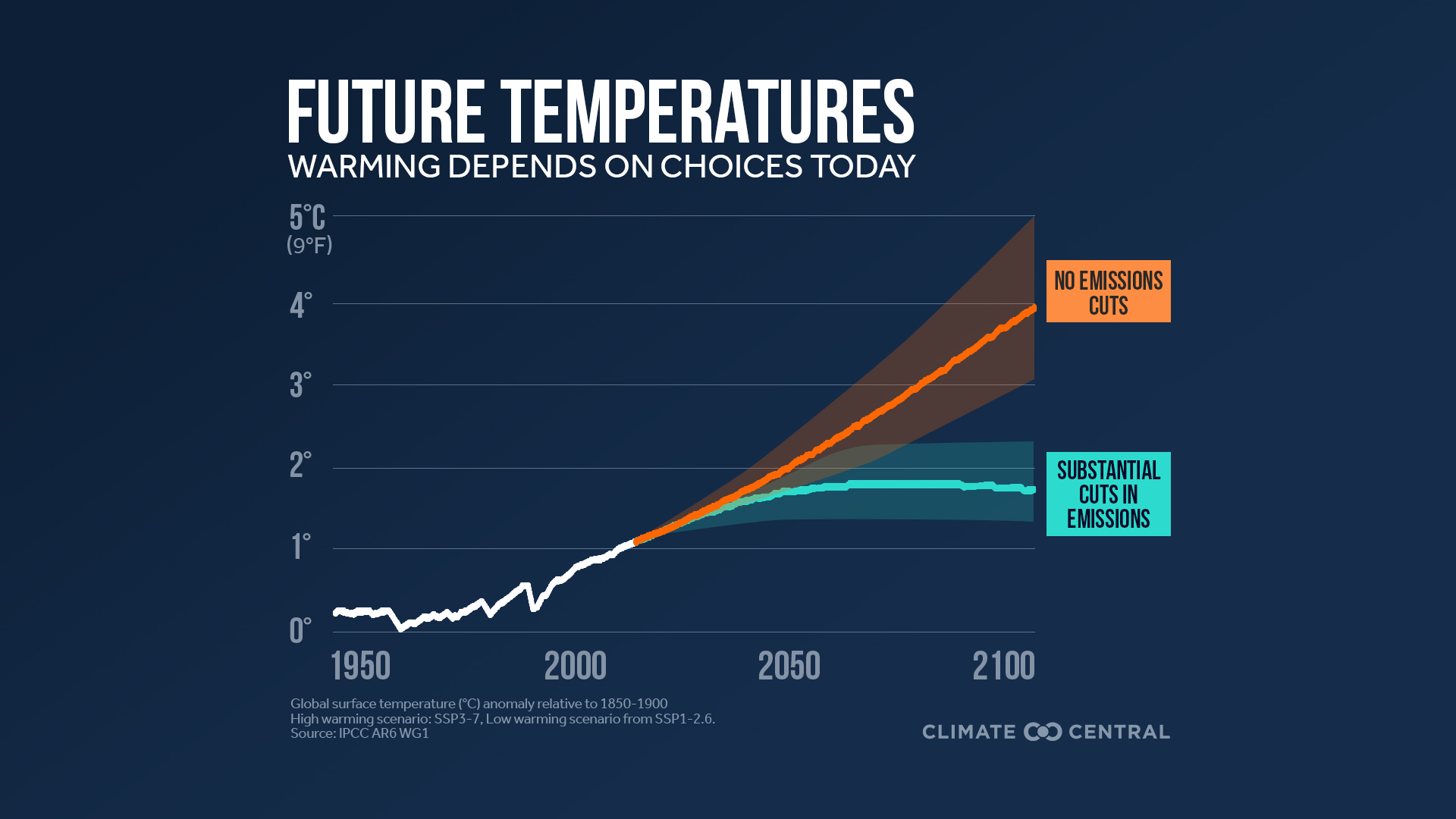
But even the best projections are subject to a wide range of uncertainty. In 2018, the IPCC began using “Shared Socioeconomic Pathways” (or SSPs) to illustrate how political and economic decisions dramatically impact future warming.9 In their 6th assessment report, their lowest-emission pathway projects a temperature increase of “only” 1.5 °C (2.7 °F) by the end of this century, while their highest-emission pathway projects a devastating 4 °C (7.2 °F).10 That’s a huge range of impact to our atmosphere, ecosystem, and civilization.
Furthermore, the climate system is vulnerable to tipping points and feedback loops whose impact and timing are difficult to predict.11 From AMOC collapse to methane traps, these changes could quickly and radically reshape our earth system, with extreme consequences.12 But because tipping points are hard to model with precision, they’re often left out of mainstream climate models.13
We chose climate for this example because we actually have very good modeling and projection in this field; despite that, the future of our atmosphere is extremely uncertain. Then consider the fact that we have even less predictive capability when it comes to social, political, and economic risk, and that all these domains affect (and are affected by) the integrity of our climate and ecosystem.
If we’re relying on the accuracy of prediction in order to plan for the future, we’re putting ourselves in a very vulnerable position. Instead, our approach is to look at the full range of possibilities, and find principles and practices that are universally beneficial regardless of outcome.

Finding Resilience
To use a simple example, consider water. If we live in a region facing water scarcity, we could look at fluctuations in the water table, comb through historic data for drought and rainfall, find climate projections for our area, all in an attempt to discern when our water might run out.
Or we could just start preparing. We could set aside reserves of drinking water,14 install more efficient appliances, collect rainfall from our roof, and use water-wise landscaping to conserve moisture.15 We don’t need to know when a drought might occur; we just need to know that it might happen sometime. And if it does, we’ll be ready.
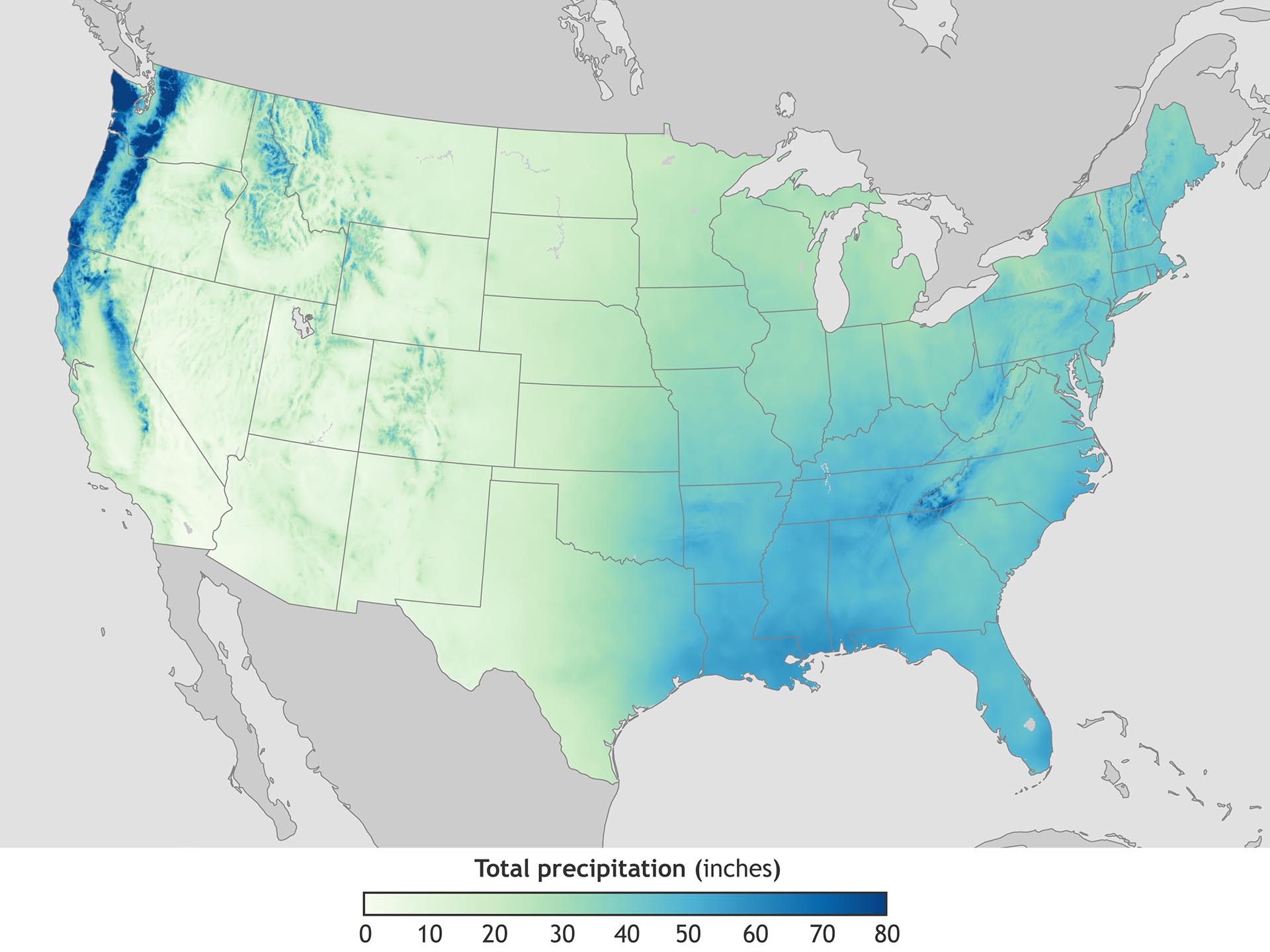
Another example is gardening. A predictive approach might ask, “What will the climate in this region look like in 2050?” and look for crops and practices that are suited to that future. A preparatory approach asks, “What plants can thrive in a wide range of temperatures? What gardening practices build resilience regardless of climate?”
Building up organic matter in your soil, increasing carbon storage, water absorption, and nutrient retention - all of these are beneficial no matter where you live.16 Planting a diverse assortment of native plants - especially those which can tolerate extremes of heat and cold, as well as periods of drought - is a great way to increase the resilience of your landscape.17 Creating habitat and forage for insects and animals supports the web of life in your local ecosystem.18
Again, we’re looking for actions that build resilience across a wide spread of futures. We’re using this approach for all the content in our guides, so we can stand behind our advice regardless of what the future brings.
Leveraging Projections
If you’ve spent some time on this site, you might be thinking, “Wait, what about your climate risk maps? And your guide on the best places to live? Aren’t those based on prediction, which you just told us to avoid?”
Yes, and no. There are two ways to use this data: the first is as a means of determining the chances of an event occurring in a given area. That’s certainly possible, but as we like to say, low-risk doesn’t mean no risk. If you live in an area that’s susceptible to hundred-year floods, there’s no guarantee that a historic flood won’t happen this year.19 Your chances of being struck by lightning are even lower, but try telling that to someone who got struck seven times!20 Even in low-risk areas, preparation is a key part of building resilience.
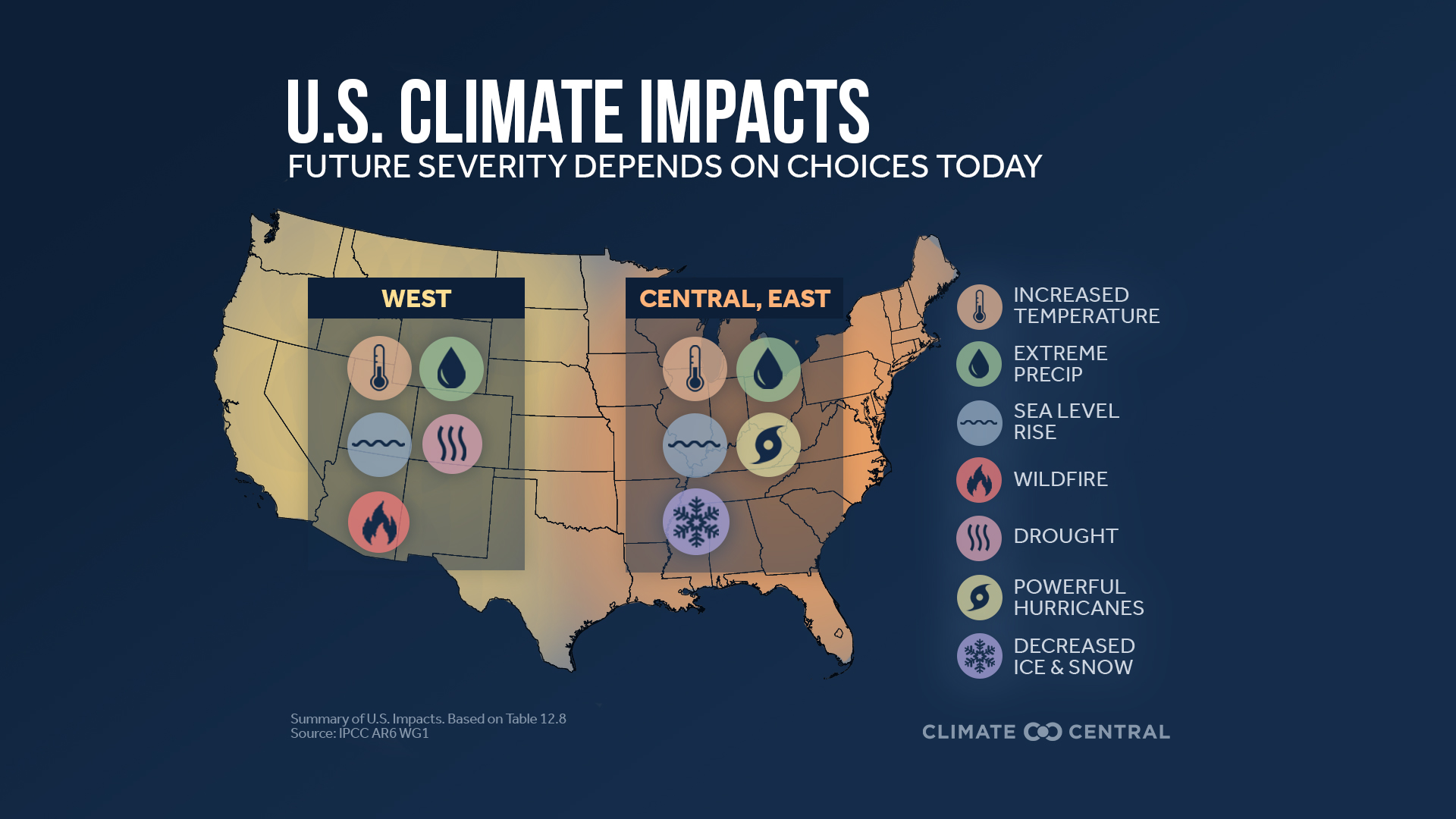
Instead, we’re using this data to determine which regions of America are relatively safe compared to the rest of the country. Rather than attempting to predict the climate and weather conditions of a region in 25 or 50 years, we’re looking for places which are in the lowest percentile of risk on a national scale. As Alex Steffen says:
We’re limited by radical uncertainties in our ability to say with definitiveness that “this place is the best.” But we don't have to have perfect prediction to be able to say, “this place looks, on the whole, better than that place.”
We don't have to make the best decision; we just have to avoid the worst decisions.21
We might not be able to predict the exact chances of a wildfire occurring in a given year, but we can say with confidence that a region full of dry, coniferous forests will face higher risk than a wetter region populated with deciduous trees.22,23 It all comes down to educated guesses, but we'd rather make an informed decision than an uninformed decision (and avail ourselves of the best data available).
One reason we like working with county-level maps is because they’re not attempting to project with a high degree of granularity. When that data is further averaged across large regions, we’re more likely to end up with an accurate picture of risk.24 To quote Taleb once more:
Don't look for the precise and the local. Simply; do not be narrow minded.1
Once we’ve identified low-risk regions, we can look at the most likely threats we’re facing there (even if they’re low-probability), and take steps to mitigate and prepare for them. That’s why we continually remind people that location isn’t a magic bullet; it’s just one tool in our kit for building climate resilience.
In Summary
Our preference for preparation over prediction should be evident from our guides; only one is centered around climate projections, while the rest are focused on building resilience in ways that are universally beneficial.
Of course, our guide on location tends to be the one people are most interested in, which is understandable. The more unstable things seem, the more we gravitate towards the certainty and security of prediction.25 Letting go of that security is difficult, but it’s a necessary part of facing the polycrisis.26 Once we understand what we can’t control, we can focus our time and energy on the things we can. We hope this approach helps you find that balance as you work to build resilience in your life.
Footnotes & References
- The Black Swan (Nassim Nicholas Taleb)
- Advances in complex climate change risk assessment for adaptation (Nicholas Simpson, Edward Sparkes, Marleen de Ruiter, Robert Šakić Trogrlić, Marlon Vieira Passos, Julius Schlumberger, Judy Lawrence, Reinhard Mechler, Stefan Hochrainer-Stigler, Climate Action)
- How Companies Are Using Climate Modeling to Improve Risk Decisions (Aon)
- Fifth National Climate Assessment (U.S. Climate Resilience Toolkit)
- IPCC Scenarios Data Explorer (Our World in Data)
- Models & Methodology (First Street)
- Methodologies (ClimateCheck)
- US Flood Risk Index (Fathom)
- Explainer: How ‘Shared Socioeconomic Pathways’ explore future climate change (Zeke Hausfather, Carbon Brief)
- AR6 Synthesis Report (IPCC)
- Uncertainties too large to predict tipping times of major Earth system components from historical data (Maya Ben-Yami, Andreas Morr, Sebastian Bathiany, Niklas Boers, Science Advances)
- Resources (Global Tipping Points)
- Overshoot: The World Is Hitting Point of No Return on Climate (Fred Pearce, Yale Environment 360)
- How to Create an Emergency Water Supply (CDC)
- Principles of Water Wise Landscaping (Utah State University)
- Fundamentals of Soil Cation Exchange Capacity (David Mengel, Purdue University)
- For Wildlife and Humans, Native Plants Are a Key to Climate Resilience (Matthew Shepherd, Xerces Society)
- Habitat Essentials (National Wildlife Federation)
- The 100-Year Flood (USGS)
- Lightning Strike Victim Data (CDC)
- Why do some people want you to ignore climate threats? (Alex Steffen, When We Are)
- How different tree species impact the spread of wildfire (Alberta Ministry of Agriculture and Irrigation)
- Fire-resistant plants for home landscapes (Amy Jo Detweiler, Stephen Fitzgerald, Ariel Cowan, Neil Bell, Thomas Stokely, Oregon State University)
- Accuracy and precision (Wikipedia)
- Surrender Your Security, Certainty, and Comfort (Reid Wilson, Psychology Today)
- The polycrisis and the uncertainty possibility space (Bruno Charbonneau, Alexandre Giguère, Cambridge University Press)

