
3,350 Words / 13 min. Read
We’ve made climate change a main focus of our work at The Reliance School, but we also recognize that it’s part of a broader ecological crisis.1,2 On top of that we’re facing a host of threats in other domains; injustice, inequity, misinformation, polarization, censorship, surveillance, and armed conflict, just to name a few.3
Each of these tugs on a thread somewhere else; ecological collapse ripples out through the economy, economic pressures ramp up societal polarization, and conflict undermines our ability to address global issues.4 In 2023, the term “polycrisis” entered the lexicon as a way to describe our modern predicament:
A polycrisis is a situation in which multiple, distinct crises occur simultaneously and interact in ways that amplify each other, producing outcomes more severe than the sum of the individual crises. The concept highlights the interdependencies and feedback loops between global systems, where shocks in one domain cascade into others.5
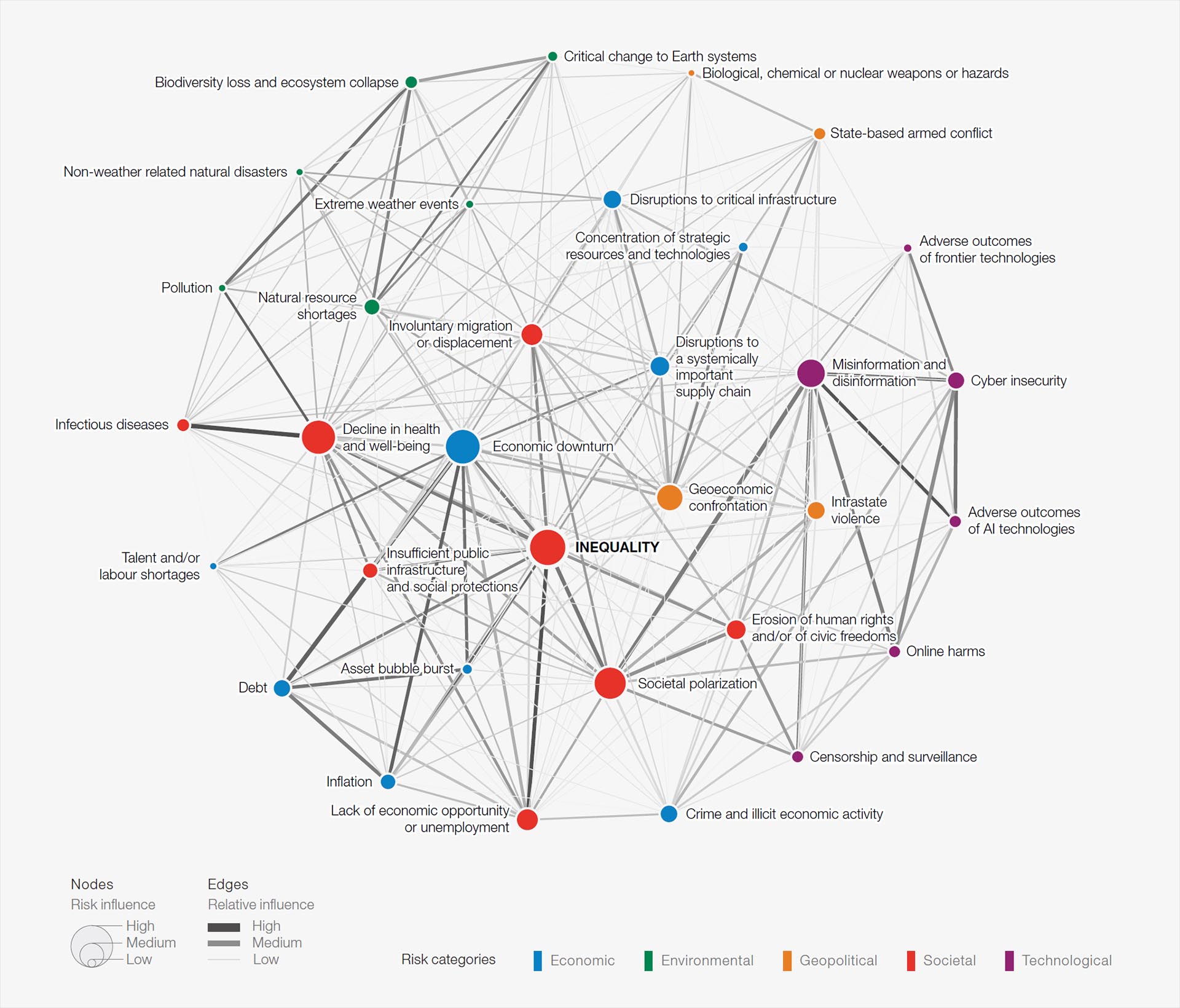
Before we can address the polycrisis, we first have to make sense of this complex and disorienting threat landscape.6,7 So in this post, we’re going to reduce that tangled web down to the 6 biggest risks, so you can focus your time and energy where it counts. From there, we can take practical, concrete steps build resilience and security in the face of these challenges.
Addressing Bias
It’s important to remove bias from this selection, as our area of focus often determines what we’re most concerned about.8,9 Someone working in tech may think unregulated AI poses the greatest risk to humanity; a doctor might believe pandemics are a more pressing threat, while a member of the military may be more worried about geopolitical conflict.
To make sure we’re presenting a balanced perspective, we’re drawing on one of the most comprehensive resources available: the Global Risks Perception Survey, or GRPS. Each year, the World Economic Forum conducts a survey of the global risk landscape, leveraging the expertise of over 1,500 leaders from government, academia, and the private sector, across every major region of the world.10
We’ve gone through the reports from 2022 through 2026, and identified the factors which consistently ranked the highest over that time period. So let’s take a look at the most pressing threats we’re facing over the coming decade.
The Top 6 Threats
Below is a table showing the ranking of global threats by year. We’ve color-coded threats by category: Economic, Environmental, Geopolitical, Societal, and Technological.
Note: as the language changes across reports, we’ve updated some risk titles for consistency.11
To create a master list, we averaged the risk ranking of these threats across all reports. When a risk factor didn’t appear in the top 10, we found their rankings in the full list; when a risk didn’t appear at all, we weighted it lower.
That led us to this list of 6 threats:
1. Extreme Weather & Natural Disasters
2. Critical Changes to Earth Systems
3. Biodiversity Loss & Ecosystem Collapse
4. Natural Resource Shortages
5. Misinformation & Disinformation
6. Societal Polarization
Let’s take a closer look at each of these factors, how they might affect you, and what we can do about them.
This is a condensed version of our series on future risk; if this information is helpful for you, you can find the full version here.
1. Extreme Weather & Natural Disasters
Loss of human life, damage to ecosystems, destruction of property and/or financial loss due to extreme weather events. Includes, but is not limited to: land-based (e.g. wildfires), water-based (e.g. floods) and atmospheric and temperature-related (e.g. heatwaves) events, including those exacerbated by climate change.10
In the most recent risk reports, extreme weather and disaster events have been the foremost concern. They pose a risk to human life,12,13 property,14,15 and the economy,16,17 and are projected to increase in both frequency and severity over the coming decade.18
While natural disasters may seem like the biggest threat, extreme heat in America kills more people than hurricanes, floods and tornadoes combined.19,20,21 Extreme heat is also the deadliest climate risk on a global scale, causing nearly 500,000 deaths per year.22,23,24
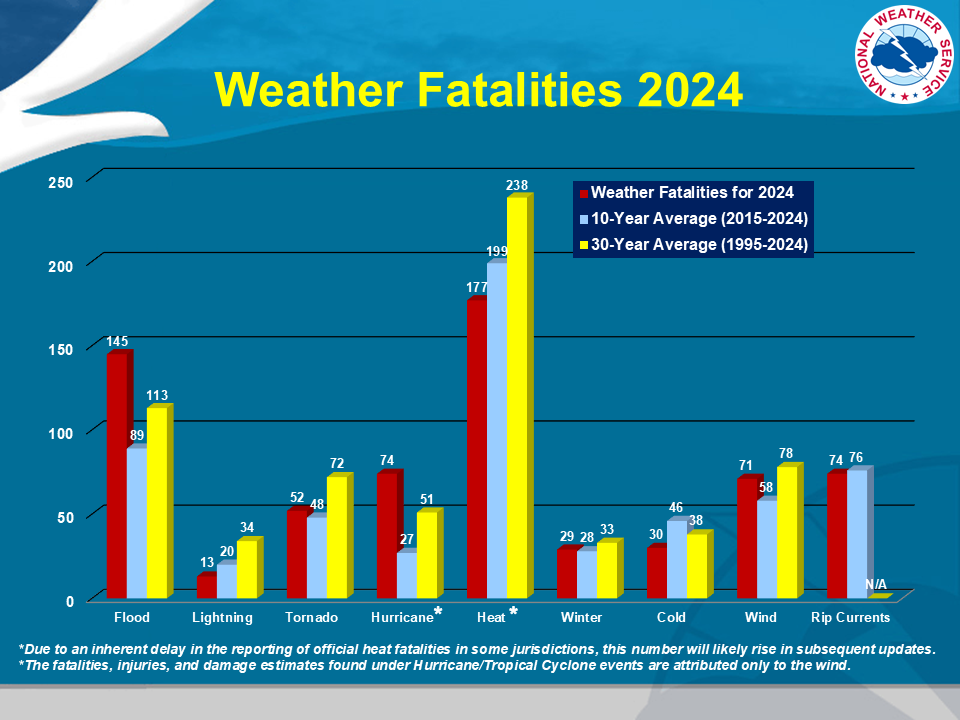
Under 2 °C of warming, some counties in the US may experience over 130 days per year with temperatures over 95 °F. For this reason (among others), we recommend that those living in the southernmost United States seriously consider moving northward as climate change intensifies. To lower your exposure to floods and fires, we recommend staying at least 100 miles inland of the coast (especially along the Eastern Seaboard), and avoiding floodplains, riverbanks, and dry coniferous forests.25,26,27
Climate-fueled disasters also pose a significant threat to the world economy:
Natural disasters destroy assets worth hundreds of billions of dollars worldwide every year. Since 1980, they have cost $6.9 trillion – roughly equivalent to the combined gross domestic product of the United Kingdom and India in 2023. Only around a third of these losses were insured, meaning that many of the people and companies affected had to bear the brunt of the damage themselves.28
Globally, the annual cost of natural disasters has grown from $32 billion in 1980 to $242 billion in 2023 (inflation-adjusted).29 Total annual flood losses have grown more than eleven-fold (from $11.2 billion in 1980 to $125.8 billion in 2023),30 while billion-dollar disasters in America have been steadily rising with each decade.
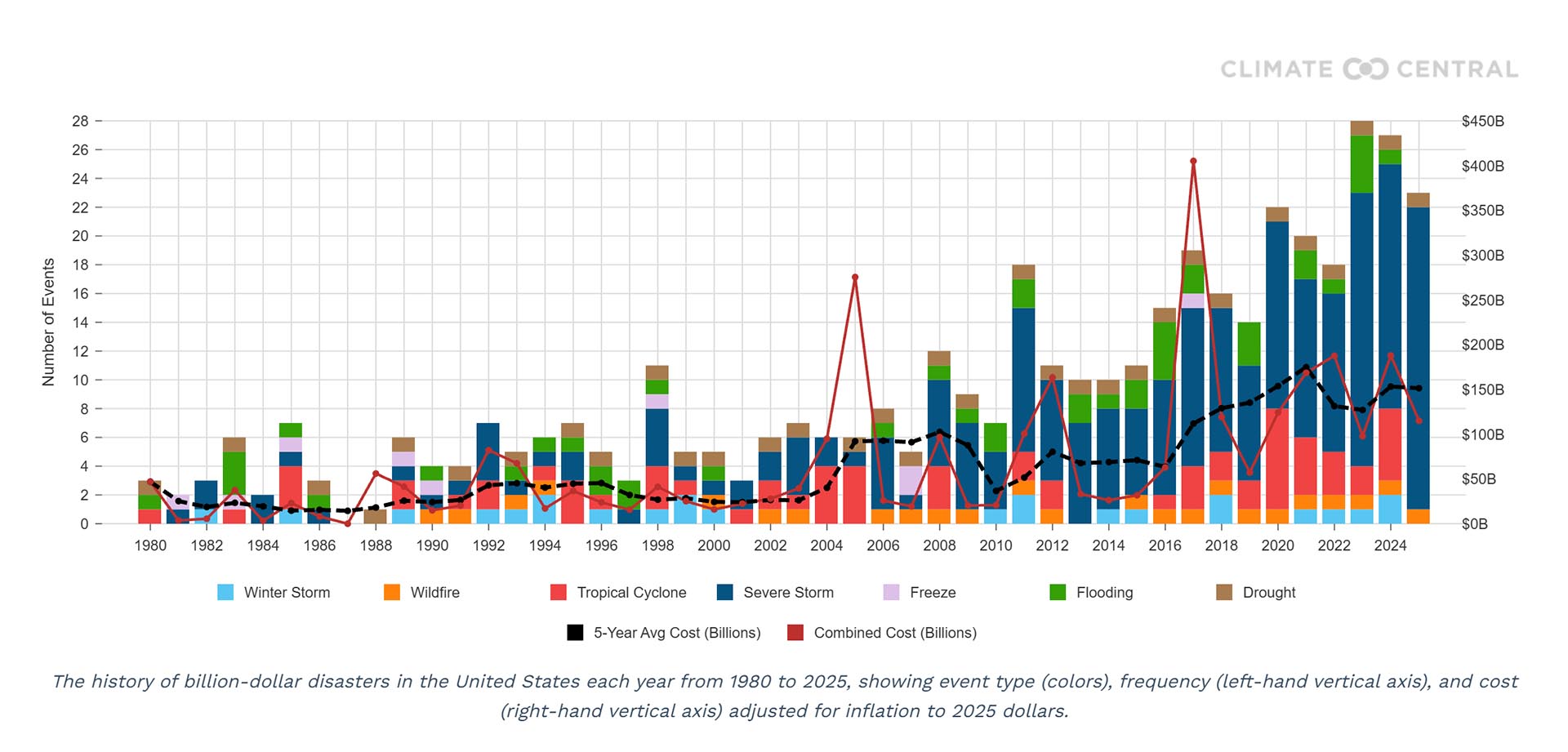
In addition to direct losses, natural disasters are driving a property insurance crisis, where it may no longer be possible to rebuild and recover from destruction.31,32 We’re already seeing the beginnings of this in America, with insurance premiums and nonrenewals rising sharply in climate-vulnerable regions.
While we don’t believe that moving alone is a magic bullet for resilience, if you live on a property or in a region that’s exposed to climate-fueled disasters, we could recommend looking into lower-risk areas, mitigating threats where possible, and putting together a kit and plan for emergencies.33
Critical Changes to Earth Systems
Long-term, potentially irreversible and self-perpetuating changes to critical planetary systems, as a result of breaching a critical climatic or ecological threshold or “tipping point”, at a regional or global level. Includes, but is not limited to: sea level rise from collapsing ice sheets; carbon release from thawing permafrost; and disruption of ocean or atmospheric currents.10
These first two risk factors fall under the umbrella of climate change; extreme weather and natural disasters are its consequences, while systemic changes are its causes. But a stable climate isn’t our only concern; it’s one of several global life-support systems we depend upon. The planetary boundaries framework helps to illustrate this:
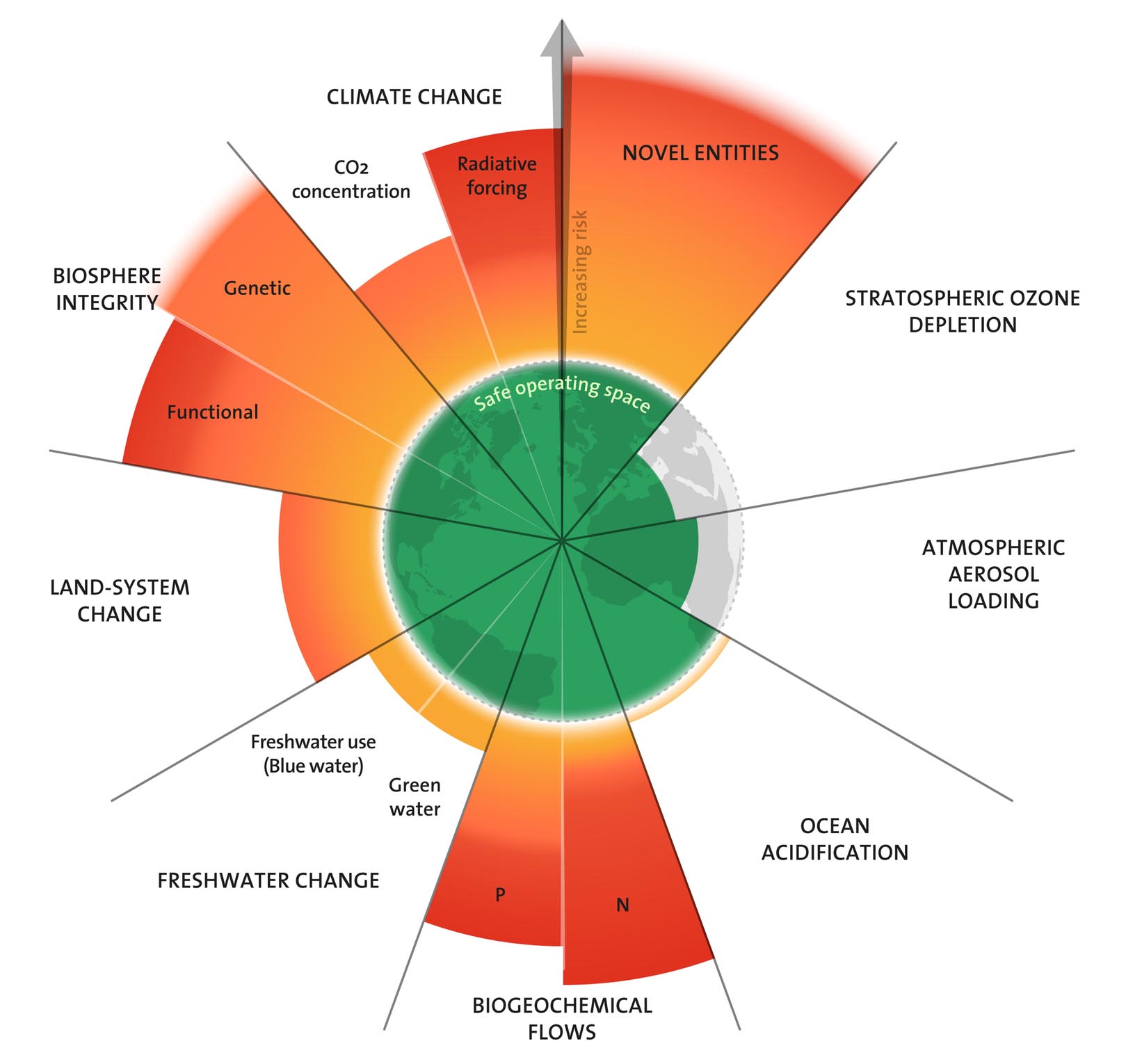
Among the planetary boundaries are climate change, chemical pollution, ozone depletion, ocean acidification, nitrogen and phosphorus flows, change in water cycles, land use and fragmentation, and biodiversity loss.34 While some of these go beyond the scope of system changes as defined by the GRPS, the key takeaway is that humanity is well outside a safe operating space.
Just as with the polycrisis, our Earth systems aren’t linear processes; they’re interconnected and interdependent, and vulnerable to “tipping points” past which change rapidly accelerates.35
Earth system tipping points create diverse and interconnected risks that are different to other climate impacts, often charactarized by irreversibility, deep uncertainty and potential for cascading failures across natural and human systems.36
As we breach 1.5 °C of warming, we’ll begin to lose our coral reefs and polar ice sheets;37,38 past 2 °C we begin to lose the Amazon Rainforest, and may see the AMOC collapse within our lifetime.39,40,41 These changes then amplify further warming, which may lead to runaway feedback loops.42,43 This could push us past a point of no return, into a “hothouse Earth” climate with temperatures over 4 °C (7.2 °F) warmer.44 Past that point, our economy and society would likely cease to function as we know it.45, 46
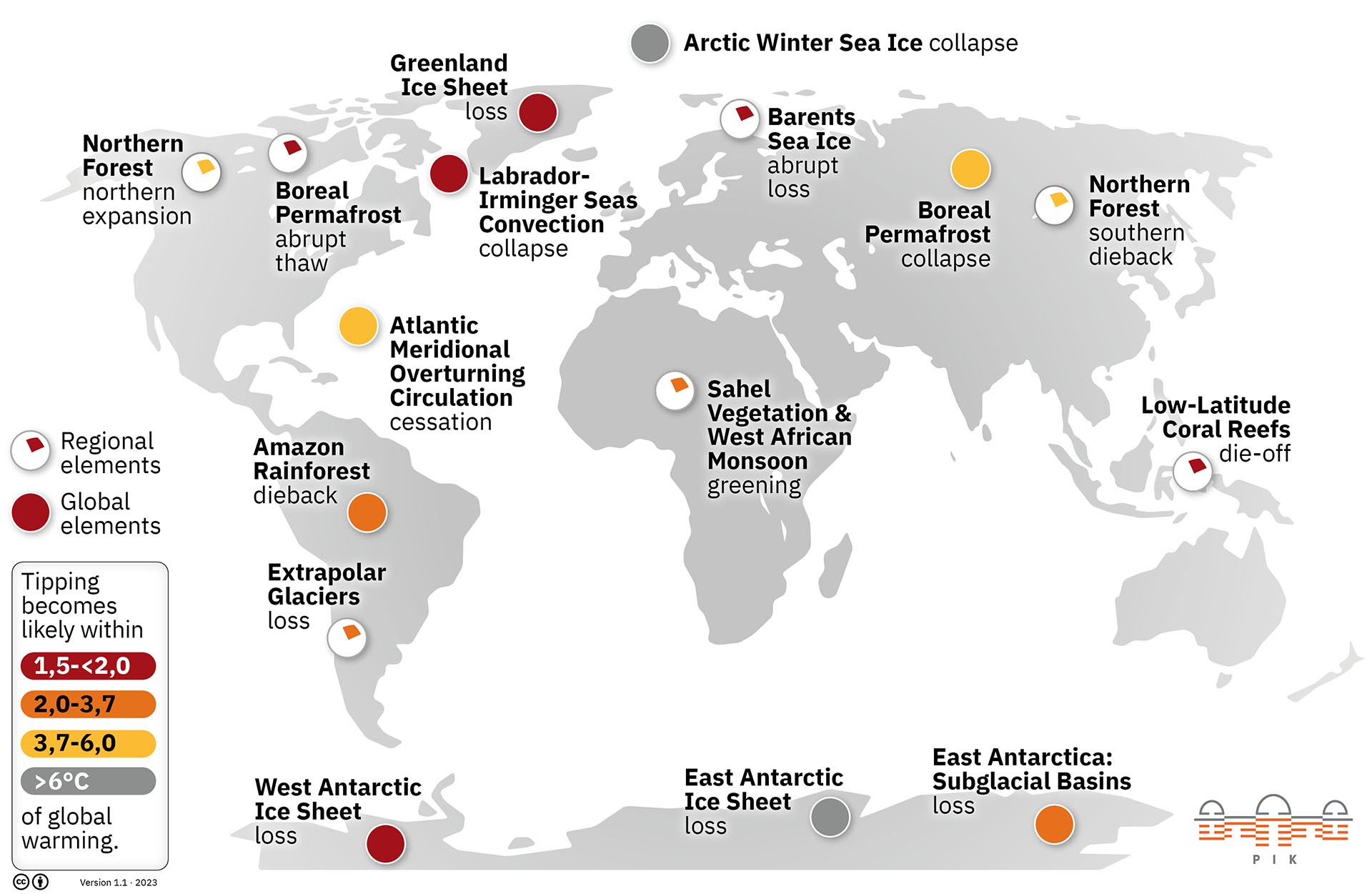
We can lower our risk from natural disasters by moving to a more resilient location, but when it comes to systemic changes, there’s nowhere to hide. As such, any plan for climate resilience must include downscaling our emissions and ecological footprint, both individually and collectively.
On a personal level, that means driving less, flying less, eating less meat, using efficient/electric appliances, cutting down on excessive purchasing, and considering the impacts of giving birth (particularly if you live in a wealthy nation like America).47,48
On a collective level, that means supporting climate-forward candidates and policies, donating to/volunteering for advocacy groups, and demanding action from businesses, leaders, and policymakers at all levels.49,50,51,52,53 There is a limit to climate adaptation, and if we’re not able to change course on a global scale, there will be little left to preserve.54
Biodiversity Loss & Ecosystem Collapse
Severe consequences for the environment, humankind and economic activity due to destruction of natural capital stemming from a result of species extinction or reduction, spanning both terrestrial and marine ecosystems.10
Most people are aware of historic mass extinctions; less people are aware that they’re living through one, caused not by asteroids or volcanic eruptions, but by the growth of human civilization. In biology, this is known as the Holocene extinction.55
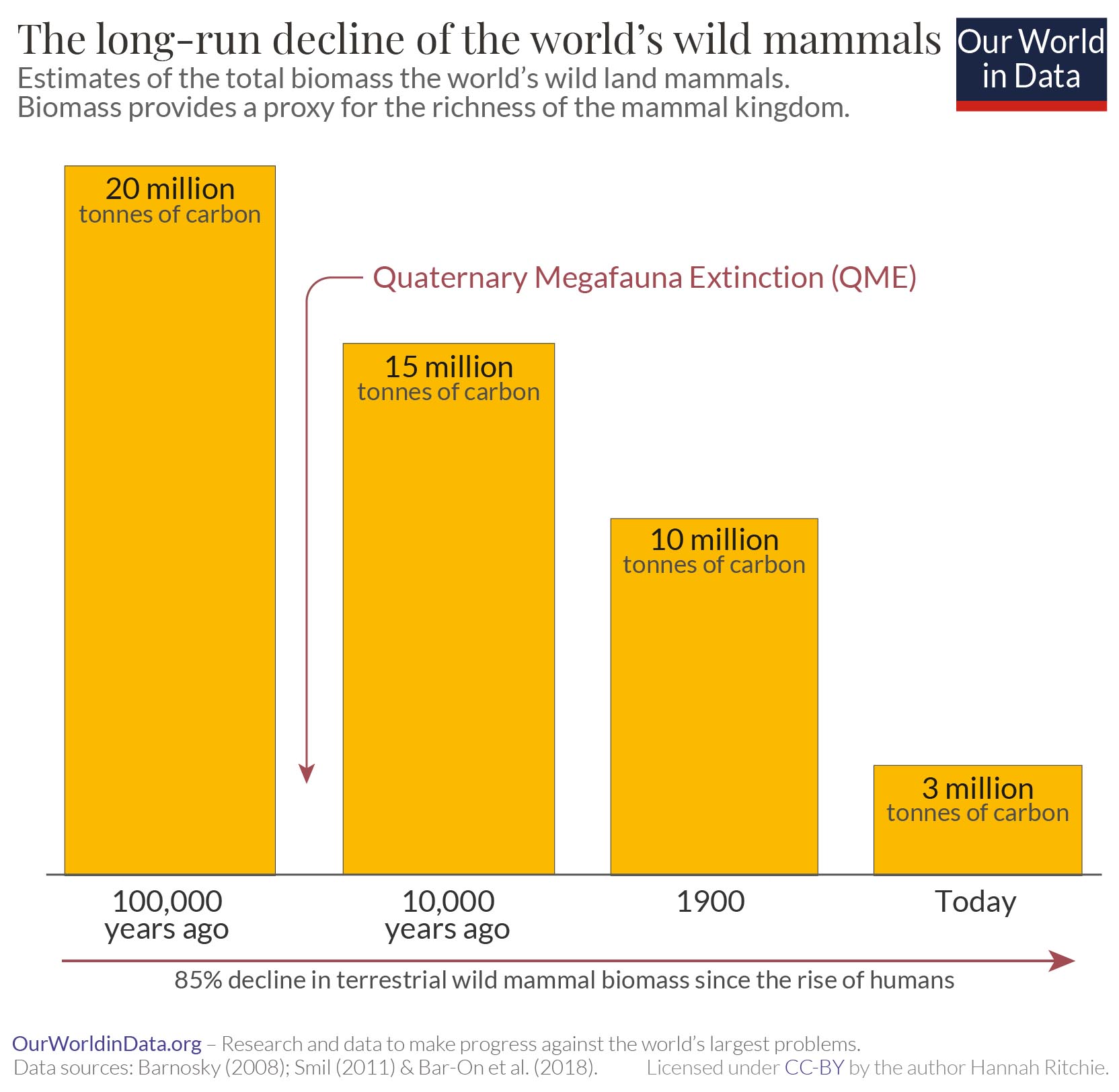
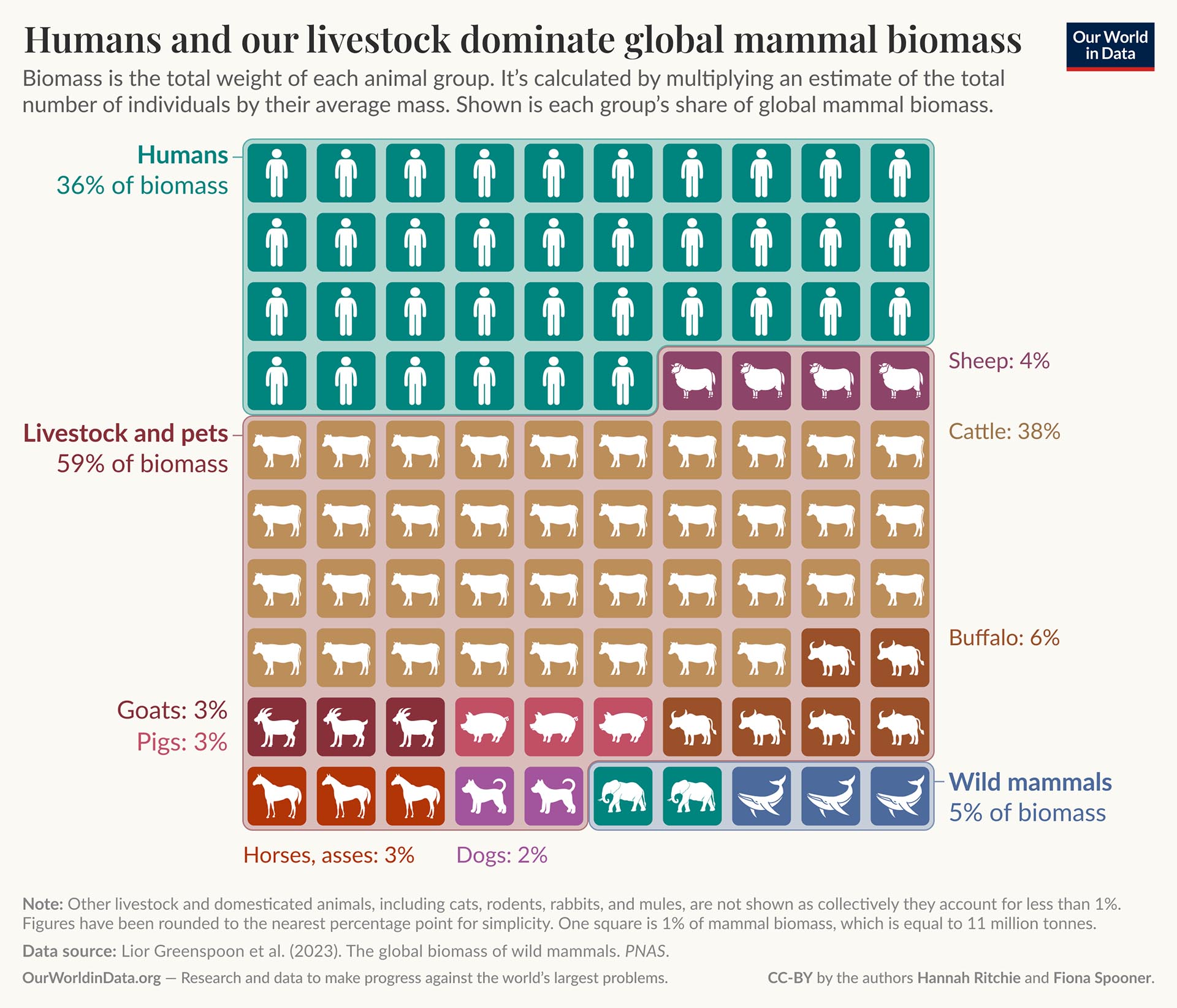
It’s estimated that wild mammal populations have declined by 85% since the arrival of homo sapiens.56 But while it took 100,000 years for humans to reduce their populations by 50%, we’ve killed and displaced another 70% in the last 50 years alone.57 Today, humans and livestock make up 95% of the world’s mammal biomass; wild mammals comprise just 5%.58
We see this trend across all branches of the kingdom Animalia. Between 1970 and 2020, ocean life has declined by 56%; terrestrial animals have declined by 69%, and freshwater species have declined by 85%.59 Insect populations have declined 45% on average in 40 years, with thousands of species at risk of extinction.60,61 It’s hard to overstate the scale of this crisis; in The Future of Life, biologist E. O. Wilson predicted that if trends continue, half of Earth's higher lifeforms could be extinct by 2100.62
Supporting a diversity of plant and animal species is critical to our food supply and economy, and is an integral part of climate resilience.63,64 According to the United Nations:
Nature underpins economic prosperity and livelihoods all over the globe: it buffers us from storms, regulates the rainfall that waters our crops, increases our food yields and helps curb our carbon emissions.
Estimates put the value of such ecosystem services at $150 trillion per year, or 1.5 times the global GDP, yet it’s dramatically undervalued by governments, investors and businesses. This irreplaceable economic resource is in trouble. Biodiversity losses are costing the world an estimated 10% of its economic output every year.65
If you have access to land, don’t pollute it with herbicides or pesticides, or cover it with ornamental monocultures like lawns.66,67,68 Instead, plant native species which offer food and habitat for insects and birds.69 Incorporate stones, leaf and brush piles, and water features to offer natural shelter for animals.70 With some time, effort, and free materials, you can create a wildlife refuge in your backyard, and regenerate your local ecosystem for the benefit of all beings.71
Natural Resource Shortages
Supply shortages of food or water for human, industry or ecosystem use, manifesting as food and water insecurity at a local, regional or global level. Stemming from, but not limited to: human overexploitation and mismanagement of critical natural resources; climate change (including drought and desertification); and/or a lack of suitable infrastructure.10
Natural resource extraction has grown by 300% since 1970 due to industrialization, urbanization and population growth, and is projected to grow by another 60% over the next 3 decades.72 Advancements in technology increase the speed and scale at which we can extract resources;73,74,75 advancements in efficiency lower resource costs, incentivizing us to consume more.76,77
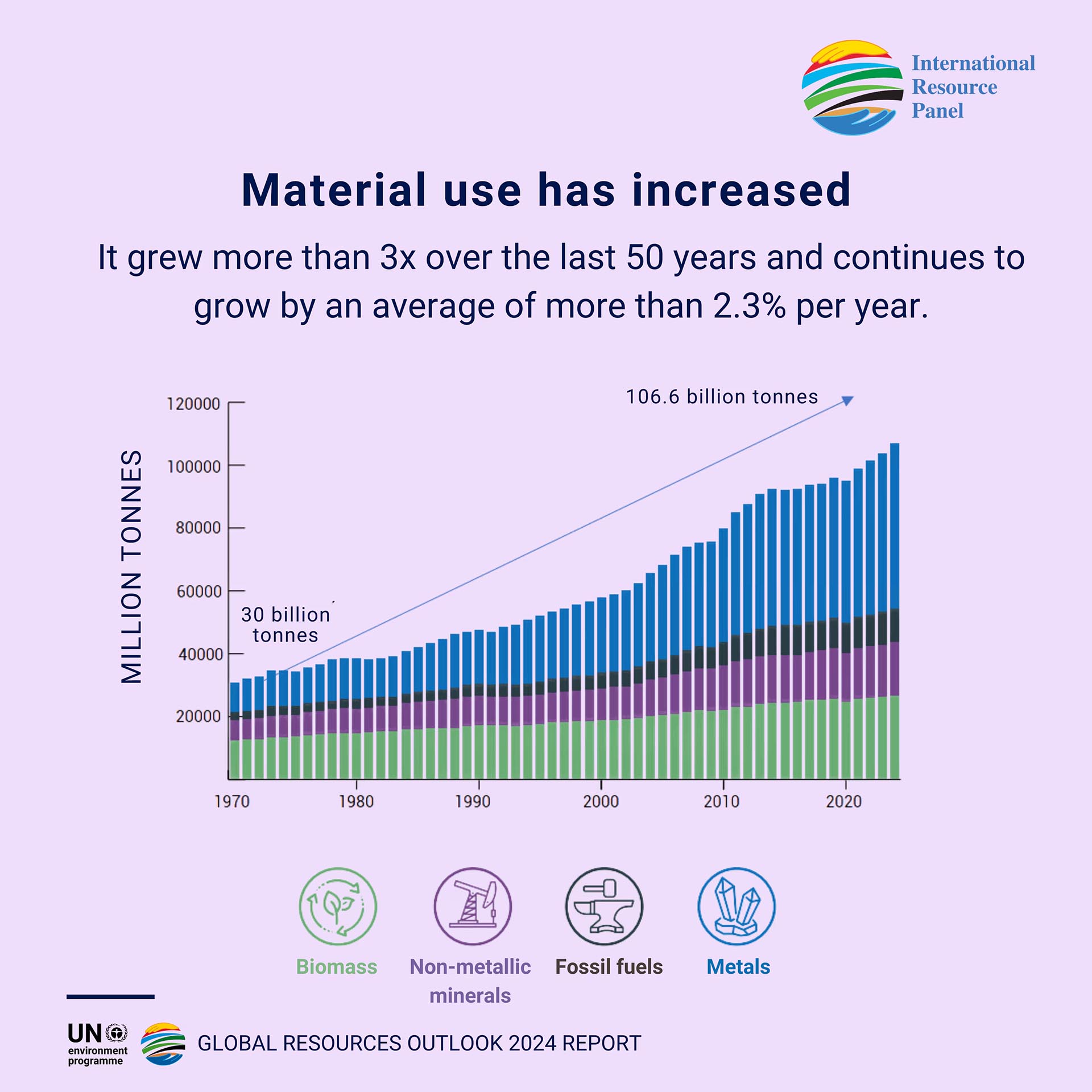
While extraction has surged, the speed at which these resources are replenished remains the same.
It takes 500 to 1,000 years to build a single inch of topsoil, while modern agriculture is eroding that soil 10x to 1,000x faster than the natural rate.78,79 Groundwater can take hundreds to thousands of years to accumulate, and 57% of the world’s largest aquifers are being depleted faster than they can recharge.80,81 It took millions of years for fossil fuel deposits to form, and we may burn through our reserves before the end of this century.82,83,84,85
The concept is simple: spend more than you save, and eventually you go broke. And according to The Global Footprint Network, we hit an ecological deficit over 50 years ago in 1971.86 Ever since then, we’ve been extracting and consuming natural resources faster than the Earth can regenerate them.
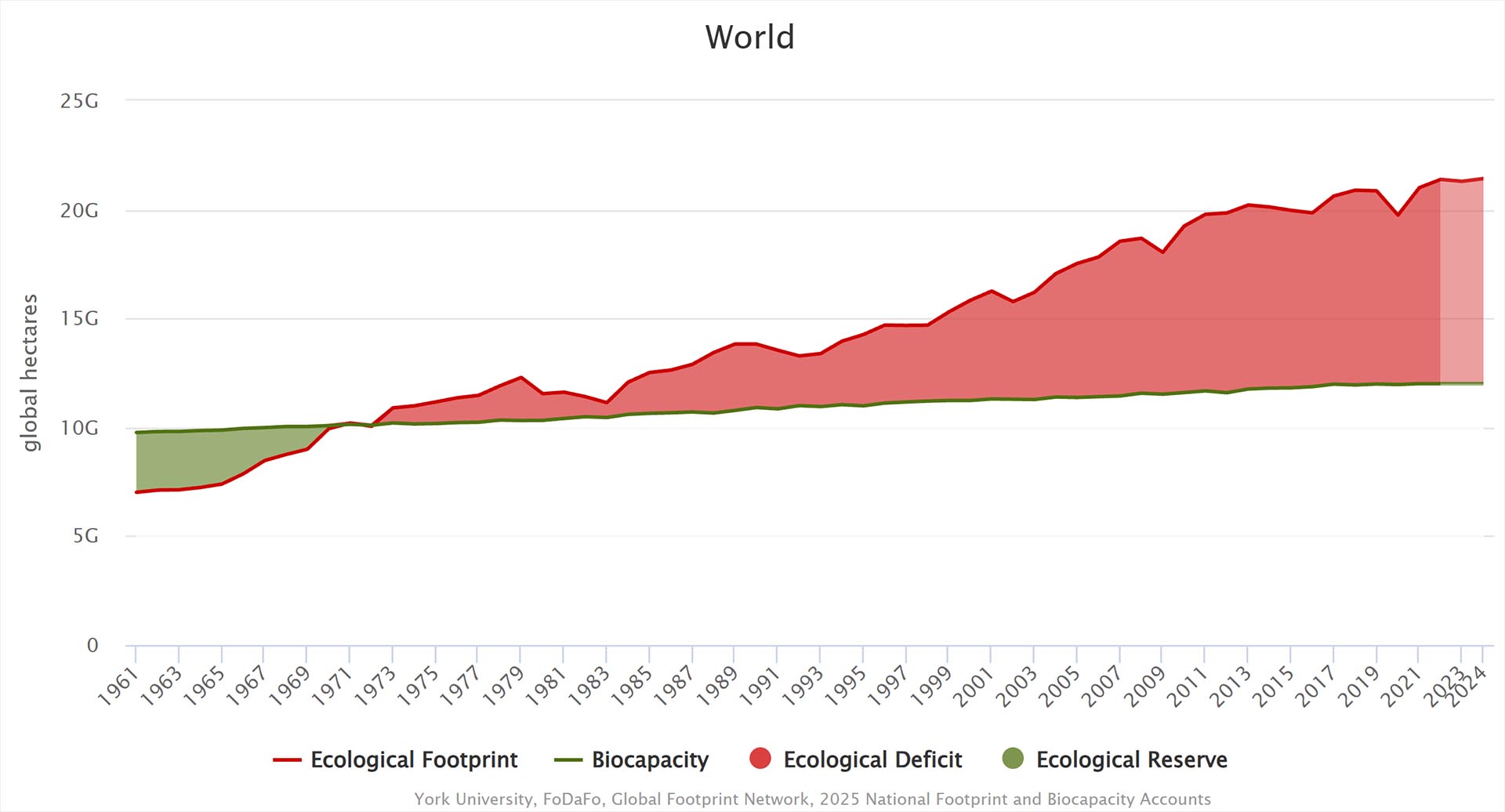
To slow these trends, we need to implement the “3 R’s” (reduce, re-use, recycle) on both a systemic and individual level.87 We should first reduce the amount of energy and materials we consume, particularly fossil fuels and disposable goods. Those goods we do manufacture should be durable and repairable, while the materials they’re made from should be non-toxic, biodegradable, and/or recyclable.88,89
From a location standpoint, this is why we believe freshwater and farmland are such key resources, and why we recommend that everyone with access to land practice some level of gardening and permaculture. Building food, water and energy security while restoring and regenerating our land is key to surviving a future where key resources are in short supply.
Misinformation & Disinformation
Persistent false information (deliberate or otherwise) widely spread through media networks, shifting public opinion in a significant way towards distrust in facts and authority. Includes, but is not limited to: false, imposter, manipulated and fabricated content.10
In order to prepare for risk, you have to be aware of it.90 But misinformation impairs our ability to make sense of the world and respond appropriately.91 Climate change is an obvious example; despite overwhelming scientific consensus, nearly half of Republicans don’t believe that human activity contributes to global warming.92,93,94 This greatly impedes our ability to address this critical issue on a national level.
That’s why we put so much effort into sourcing and referencing these articles, and why we don’t use AI to generate any of our content. Just as we don’t want to pollute our land and waterways with toxic chemicals, we don’t want to pollute the information landscape with low-quality content (or worse, outright deception).95

While misinformation has always existed, social media has amplified the scope and speed with which misinformation spreads, as algorithms prioritize engagement over accuracy.96 A study found that falsehoods are 70% more likely to be retweeted on Twitter than the truth, and that they reached people 6 times faster.97 And with the advent of deepfakes and generative AI, confusion and mistrust of our information is likely to worsen considerably.98
While there are systemic interventions to online misinformation (such as community notes, and algorithmic detection of AI content),99,100 large platforms are often more beholden to financial incentives than moral ones.101,102 As such, it’s our responsibility to fact-check the information we consume (and share!) online, especially when it comes to assessing and preparing for risk.
Societal Polarization
Present or perceived ideological and cultural divisions within and across communities leading to declining social stability; gridlocks in decision-making; economic disruption; and increased political polarization.10
While polarization is a global issue, it may be most pronounced in America, where ideological divisions between parties have reached levels not seen since the Civil War.103 A 2024 Gallup poll found that a record-high 80% of U.S. adults believe Americans are greatly divided on the most important values, while only 18% believe the country is united.104 This has (understandably) led to fears of large-scale political violence or civil conflict breaking out in our country.105
While we don’t want to downplay that risk, our perception of the problem may be worse than reality.106 As Johanna Dunaway states:
“Much of the polarization that escalated in recent decades was largely driven by misperceptions people have about ordinary partisans on the other side - the everyday people in your neighborhood or office who happen to support the other party.
The political leaders who receive the most media attention are usually the more extreme members of their party, left or right. As a result, people tend to assume ordinary partisans hold the same views as their party’s leaders. This is rarely the case except among the most extreme voters.”107

Polarization makes it extremely difficult to address big issues which require collective action (like the ones here in this post); that's why we’re such big advocates of cultivating community as a means of building a resilient future.108,109
To start, stay out of online “echo chambers” which tend to promote confirmation bias, and try not to engage in online arguments with strangers (which rarely brings out the best in either position).1110,111 Instead, keep your debates to the real world, with people with whom you’ve established some baseline of trust and respect. When you do, try to practice “steelmanning;” attempting in good faith to understand and support an opposing argument before responding to it.112
That’s not to say you have to accept extreme or intolerant opinions; some ideological divides are too big to bridge. But any time we spend building connection with others (especially those with different beliefs) is time spent healing this divide in our country.
Prediction vs. Preparation
By now it should be evident how all these aspects of the polycrisis are interconnected. Technology amplifies misinformation, which deepens polarization, which makes it harder to combat climate change, which causes species extinctions and resource crises (and so on).
To be clear, this isn’t our attempt to predict the future. While some systems (like our climate) can be modeled and projected, predicting the trajectory of our economy, technology, or society simply isn’t possible on a granular scale. Humans aren’t rational actors, and the events that shape history are often the ones that no one saw coming.113
There are also many areas of concern which we haven’t covered here, such as armed conflict, migration and displacement, deepening inequality, censorship and surveillance, erosion of human rights, debt crises, pandemics and health crises, and nuclear conflict.
While these were included in the GRPS, they consistently placed lower on the list. That doesn’t mean we won’t have to face them, but our goal here is to help you triage your time and attention, so that you can direct your resources towards the most relevant threats. To quote Nassim Nicholas Taleb:
“Remember that infinite vigilance is just not possible. Invest in preparedness, not in prediction.”113

Rather than putting together a patchwork of plans for different scenarios, look for actions and principles that can be applied to a wide range of threats. That's our goal with How To Survive the Future, and with all the resources we’re providing here.
Among those are 5 Keys to Surviving the Future, our crash course in building security across all areas of your life. In our series on climate havens, we’ve developed a 4-part formula for finding a more secure location to call home. And if you haven’t already accessed our collection of risk maps, that’s a great tool for seeing which regions of America are most exposed to risk.
However you choose to face the future, we hope this post helps you make sense of the modern risk landscape, and focus your efforts on what matters most.
Footnotes & References
- World scientists’ warning: The behavioural crisis driving ecological overshoot (Joseph Merz, Phoebe Barnard, William Rees, Dane Smith, Mat Maroni, Christopher Rhodes, Julia Dederer, Nandita Bajaj, Michael Joy, Thomas Wiedmann, Rory Sutherland, Science Progress)
- It’s time to move beyond “carbon tunnel vision" (Ploy Achakulwisut, Patricio Calles Almeida, Elisa Arond, Stockholm Environment Institute)
- Global Risks Report (World Economic Forum)
- Evolution of the polycrisis: Anthropocene traps that challenge global sustainability (Peter Søgaard Jørgensen, Raf E. V. Jansen, Daniel Avila Ortega, Lan Wang-Erlandsson, Jonathan Donges, Henrik Österblom, Per Olsson, Magnus Nyström, Steven Lade, Thomas Hahn, Carl Folke, Garry Peterson, Anne-Sophie Crépin, Philosophical Transactions)
- Polycrisis (Wikipedia)
- Understanding human psychology during the polycrisis (Ipsos)
- We are living in a time of polycrisis. If you feel trapped – you’re not alone (Theresa MacPhail, The Guardian)
- Attentional bias (Wikipedia)
- Fooled by Experience (Emre Soyer, Robin Hogarth, Harvard Business Review)
- Global Risks Report 2026 (World Economic Forum)
- Global risks in 2026 and over the past 5 years: What’s changed and what hasn’t? (Grace Atkinson, World Economic Forum)
- The human cost of disasters: an overview of the last 20 years (Centre for Research on the Epidemiology of Disasters, United Nations Office for Disaster Risk Reduction)
- Atlas of Mortality and Economic Losses from Weather, Climate and Water-related Hazards (World Meteorological Organization)
- The Impact of Natural Disasters on US Home Ownership (Tamara Sheldon, Crystal Zhan, Journal of the Association of Environmental and Resource Economists)
- Is Your Home at Risk of Experiencing a Natural Disaster? (Sarah Derouin, Eos)
- Natural Disasters Cost Global Economy $417 Billion in 2024 (Risk & Insurance)
- The Economic Impacts of Natural Disasters: A Review of Models and Empirical Studies (W. J. Wouter Botzen, Olivier Deschenes, Mark Sanders, Review of Environmental Economics and Policy)
- Extreme Weather and Climate Change: Population Health and Health System Implications (Kristie Ebi, Jennifer Vanos, Jane Baldwin, Jesse Bell, David Hondula, Nicole Errett, Katie Hayes, Colleen Reid, Shubhayu Saha, June Spector, Peter Berry, Annual Review of Public Health)
- Extreme Weather Injuries and Fatalities, 2006 to 2021 (Caroline Stephens, Christopher Newton, Brandon Kappy, Journal of the American Medical Association)
- Weather Related Fatality and Injury Statistics (National Weather Service)
- Extreme Heat Is Deadlier Than Hurricanes, Floods and Tornadoes Combined (Terri Adams-Fuller, Scientific American)
- Extreme heat: What to know about the deadliest climate risk of our time (Tom Crowfoot, World Economic Forum)
- Heat and health (World Health Organization)
- Health in a world of extreme heat (The Lancet)
- Sea-level rise exponentially increases coastal flood frequency (Mohsen Taherkhani, Sean Vitousek, Patrick Barnard, Neil Frazer, Tiffany Anderson, Charles Fletcher, Scientific Reports)
- Flood Maps (FEMA)
- Contemporary fires are less frequent but more severe in dry conifer forests of the southwestern United States (Emma McClure, Jonathan Coop, Christopher Guiterman, Ellis Margolis, Sean Parks, Communications Earth & Environment)
- Natural disasters worldwide: Losses are on the rise as climate change strikes (Munich Re)
- Global damage costs from natural disasters (Our World in Data)
- Defining the Globe's Flood Risk (First Street)
- The Uninsurable Future: The Climate Threat to Property Insurance, and How to Stop It (Dave Jones, The Yale Law Journal)
- Uninsurable future (United Nations University, Institute for Environment and Human Security)
- How to Assess Your Home’s Climate Risk (Simmone Shah, Time)
- Planetary boundaries (Stockholm Resilience Centre)
- Exceeding 1.5°C global warming could trigger multiple climate tipping points (David Armstrong McKay, Arie Staal, Jesse Abrams, Ricarda Winkelmann, Boris Sakschewski, Sina Loriani, Ingo Fetzer, Sarah Cornell, Johan Rockström, Timothy Lenton, Science)
- Earth System Tipping Point Risks (Global Tipping Points)
- World reaches first climate tipping point – widespread mortality of coral reefs (Stockholm Resilience Centre)
- Warming of +1.5 °C is too high for polar ice sheets (Chris Stokes, Jonathan Bamber, Andrea Dutton, Robert DeConto, Communications Earth & Environment)
- ‘Significant’ risk of Amazon forest dieback if global warming overshoots 1.5C (Ayesha Tandon, Carbon Brief)
- Achieving net zero greenhouse gas emissions critical to limit climate tipping risks (Tessa Möller, Annika Ernest Högner, Carl-Friedrich Schleussner, Samuel Bien, Niklas Kitzmann, Robin Lamboll, Joeri Rogelj, Jonathan Donges, Johan Rockström, Nico Wunderling, Nature Communications)
- Ocean current ‘collapse’ could trigger ‘profound cooling’ in northern Europe – even with global warming (Cecilia Keating, Carbon Brief)
- Climate Feedback Loops and Tipping Points (UCAR)
- Many risky feedback loops amplify the need for climate action (William Ripple, Christopher Wolf, Timothy Lenton, Jillian Gregg, Susan Natali, Philip Duffy, Johan Rockström, Hans Joachim Schellnhuber, One Earth)
- The risk of a hothouse Earth trajectory (William Ripple, Christopher Wolf, Johan Rockström, Katherine Richardson, Nico Wunderling, Jillian Gregg, Thomas Westerhold, Hans Joachim Schellnhuber, One Earth)
- Flawed economic models mean climate crisis could crash global economy, experts warn (Damian Carrington, The Guardian)
- Recalibrating Climate Risk (Jesse Abrams, Sam Hu, Ben Dickenson Bampton, Green Futures Solutions)
- The climate mitigation gap: education and government recommendations miss the most effective individual actions (Seth Wynes, Kimberly Nicholas, Environmental Research Letters)
- Get your climate priorities straight (Kimberly Nicholas, We Can Fix It)
- Understanding the climate responsibility associated with elections (Seth Wynes, Matthew Motta, Simon Donner, One Earth)
- The Impacts of Climate Activism (Robyn Gulliver, The Commons)
- How to motivate collective action on climate (Laura Castañón, Stanford University)
- Building Public and Political Will for Climate Change Action (Anthony Leiserowitz, Yale University)
- A guide to effective climate change action (Citizens' Climate Lobby)
- Present and future limits to climate change adaptation (Christopher Callahan, Nature Sustainability)
- Holocene extinction (Wikipedia)
- Wild mammals have declined by 85% since the rise of humans, but there is a possible future where they flourish (Our World in Data)
- Nature in crisis: The current state of global nature loss (World Wide Fund For Nature)
- Almost all of the world’s mammal biomass is humans and livestock (Our World in Data)
- 2024 Living Planet Report (World Wide Fund For Nature)
- Insect decline in the Anthropocene: Death by a thousand cuts (David Wagner, Eliza Grames, Matthew Forister, May Berenbaum, David Stopak, PNAS)
- Elevated extinction risk in over one-fifth of native North American pollinators (Tara Cornelisse, David Inouye, Rebecca Irwin, Sarina Jepsen, Jonathan Mawdsley, Margaret Ormes, Jaret Daniels, Diane Debinski, Terry Griswold, John Klymko, Michael Orr, Leif Richardson, Nicole Sears, Dale Schweitzer, Bruce Young, PNAS)
- The Future of Life (Edward Wilson)
- Biodiversity (World Health Organization)
- Biodiversity - our strongest natural defense against climate change (United Nations)
- How the World Can Make Protecting Nature Pay (United Nations Climate Summit)
- Top 7 Reasons to Stop Pesticide Use at Home (Aimée Code, Xerces Society)
- America’s Killer Lawns (Margaret Renkl, The New York Times)
- Our Lawns Are Killing Us. It’s Time to Kick the Habit (Maureen Sundberg, Ecological Landscape Alliance)
- Why Native Plants Matter (National Audubon Society)
- Identifying Habitat Opportunities (Xerces Society)
- Homegrown National Park (Homegrown National Park)
- Global Resources Outlook 2024 (United Nations Environment Programme, International Resource Panel)
- I = PAT (Wikipedia)
- A simple extension of dematerialization theory: Incorporation of technical progress and the rebound effect (Christopher Magee, Tessaleno Devezas, Technological Forecasting and Social Change)
- Non-Renewable Resources, Extraction Technology and Endogenous Growth (Gregor Schwerhoff, Martin Stuermer, Federal Reserve Bank of Dallas)
- Jevons paradox (Wikipedia)
- Jevons’ Paradox and the myth of technological liberation (John Polimeni, Raluca Iorgulescu Polimeni, Ecological Complexity)
- Soil in Midwestern US is Eroding 10 to 1,000 Times Faster than it Forms, Study Finds (Daegan Miller, University of Massachussetts)
- Pre-agricultural soil erosion rates in the midwestern United States (Caroline Quarrier, Jeffrey Kwang, Brendon Quirk, Evan Thaler, Isaac Larsen, Geology)
- 5 Facts on Groundwater Depletion (United Nations University)
- Rapid groundwater decline and some cases of recovery in aquifers globally (Scott Jasechko, Hansjörg Seybold, Debra Perrone, Ying Fan, Mohammad Shamsudduha, Richard Taylor, Othman Fallatah, James Kirchner, Nature)
- Petroleum (National Geographic)
- Years of fossil fuel reserves left (Our World in Data)
- Plummeting 'Energy Return on Investment' of Oil and the Impact on Global Energy Landscape (Siddharth Misra, Journal of Petroleum Technology)
- Peak oil and the low-carbon energy transition: A net-energy perspective (Louis Delannoy, Pierre-Yves Longaretti, David Murphy, Emmanuel Prados, Applied Energy)
- Past Earth Overshoot Days (Global Footprint Network)
- The Three Rs: Order is Important (Emma MacDonald, University of Connecticut)
- Right to Repair (repair.org)
- Recycling by material (Wikipedia)
- Three-Steps to Effective Risk Management: Identifying, Evaluating, and Mitigating Risks (League Association of Risk Management)
- (Why) Is Misinformation a Problem? (Zoë Adams, Magda Osman, Christos Bechlivanidis, Björn Meder, Perspectives on Psychological Science)
- Greater than 99% consensus on human caused climate change in the peer-reviewed scientific literature (Mark Lynas, Benjamin Houlton, Simon Perry, Environmental Research Letters)
- How Americans View Climate Change and Policies to Address the Issue (Brian Kennedy, Alec Tyson, Pew Research Center)
- Many Americans believe that climate change is mostly caused by human activity, but few report making changes to help limit it (Ipsos)
- Misinformation as Information Pollution (Ashkan Kazemi, Rada Mihalcea, arXiv)
- AI-powered software is helping misinformation spread online after disasters (Justin Hicks, NPR)
- The spread of true and false news online (Soroush Vosoughi, Deb Roy, Sinan Aral, Science)
- Deepfakes and the crisis of knowing (Nadia Naffi, UNESCO)
- Community notes reduce engagement with and diffusion of false information online (Isaac Slaughter, Axel Peytavin, Johan Ugander, Martin Saveski, PNAS)
- Stopping AI disinformation: Protecting truth in the digital world (Cathy Li, Agustina Callegarim, World Economic Forum)
- How different incentives reduce scientific misinformation online (Piero Ronzani, Folco Panizza, Tiffany Morisseau, Simone Mattavelli, Carlo Martini, Harvard Misinformation Review)
- Companies inadvertently fund online misinformation despite consumer backlash (Wajeeha Ahmad, Ananya Sen, Charles Eesley, Erik Brynjolfsson, Stanford University)
- Political polarization at its worst since the Civil War (Laura Paisley, University of Southern California)
- Americans Agree Nation Is Divided on Key Values (Jeffrey Jones, Gallup)
- Could America break apart? UCSB expert explores the possibility (Tom Jacobs, University of California)
- Is the United States Headed Toward a Civil War? (Benjamin Jensen, Joseph Young, Center for Strategic and International Studies)
- The 'Great Divide': Understanding US Political Polarization (Johanna Dunaway, Diane Stirling, Syracuse University)
- What Is the True Cost of Polarization in America? (Zaid Jilani, Jeremy Adam Smith, Greater Good Science Center)
- Political polarization and its echo chambers (Morgan Kelly, Princeton University)
- Echo chamber (media) (Wikipedia)
- Someone Is Wrong on the Internet: Having Hard Conversations in Online Spaces (Amanda Baughan, Justin Petelka, Catherine Jaekyung Yoo, Jack Lo, Shiyue Wang, Amulya Paramasivam, Ashley Zhou, Alexis Hiniker, Proceedings of the ACM on Human-Computer Interaction)
- Steelmanning (Wikipedia)
- The Black Swan (Nassim Nicholas Taleb)

