
2,250 Words / 9 min. Read
“Climate haven” is a bit of a contentious term. It’s been used by cities and states looking to become a refuge for those fleeing the effects of climate change,1,2,3 while at the same time, it’s been derided for promoting a false sense of security.4,5,6
Since we've used this term in our content and writing, we thought it would be helpful to address it; what it means, if it’s useful or appropriate, and which risks we can (and can’t) avoid through our choice of location.
What is a “climate haven”?
We use the term “climate haven” mainly for practical reasons; it’s short, searchable, and makes for more manageable post titles. When we say “climate haven,” we’re referring to a town, city, or region that’s projected to experience less risk from climate-fueled crises. That’s a mouthful, so we usually go with the shorter version and expand on it in the content.
If we take “climate haven” to mean “someplace where we can escape the effects of climate change,” then the term becomes more problematic. And it understandably gets some pushback, likely from the assumption that if people believed they could escape climate change, they would be less incentivized to lower their consumption and emissions, or vote and advocate for climate-forward policies.
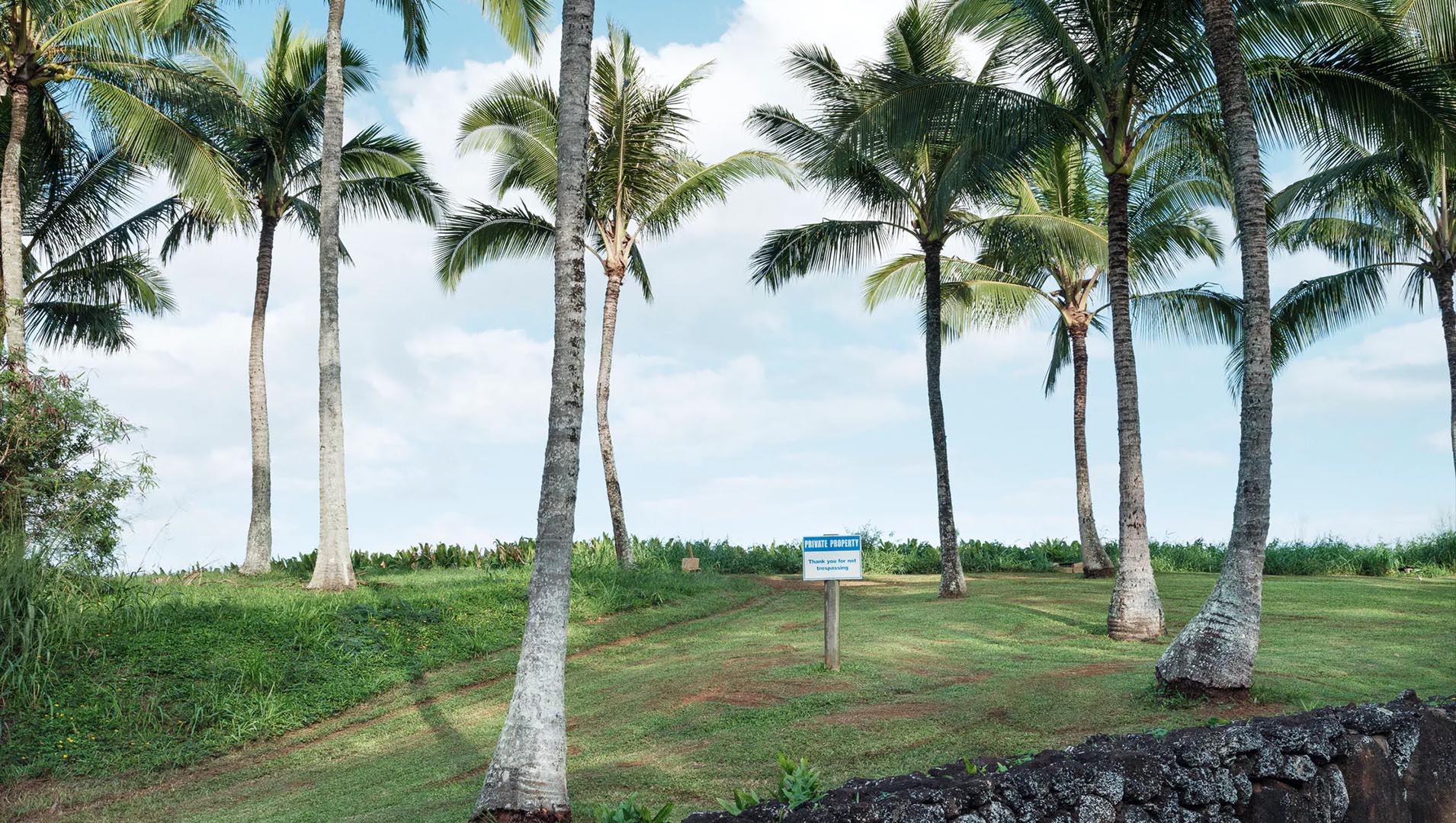
That may hold true for a handful of ultra-wealthy individuals, who are building elaborate “survival compounds”7,8 while simultaneously accelerating the social and environmental conditions that would necessitate their use.9,10,11,12
But we haven’t found that to be true for the average person; in our experience, there’s very little overlap between people who are concerned about climate change and those who think they can escape it. We find that most people who are concerned enough about climate change to consider moving are also well aware of the limits to adaptation. As such, we don’t have a problem with using the term “climate haven” so long as we take care to explain what we mean by it.
Absolute vs. Relative Safety
If you make a post on a forum like Reddit asking which states or cities are safe from climate change, you may be met by variations on “nowhere is safe.”

We’ve seen this same sentiment in several news articles, many of which emerged in the aftermath of hurricane Helene.13,14

When people say “nowhere is safe,” they’re often talking in terms of absolute safety. And that’s true - no place is completely insulated from the effects of climate change. But for that matter, no place is completely insulated from anything! You could become a victim of burglary even in the safest city in America,15 but that doesn’t mean you should ignore crime statistics. In our opinion, “nowhere is safe” isn't a helpful or constructive response to someone who’s looking for a better place to call home.
Consider the analogy of a bicycle helmet; wearing a helmet won’t prevent you from being hit by a car, nor will it protect you from breaking your arm or your leg in an accident. Yet research consistently shows that helmets are extremely effective for preventing head and brain injuries when cycling, regardless of the crash type.16,17,18 So if you own a bike, we’d recommend that you purchase a helmet with a good rating,19 put it on for every ride, and make sure your friends and family do too!
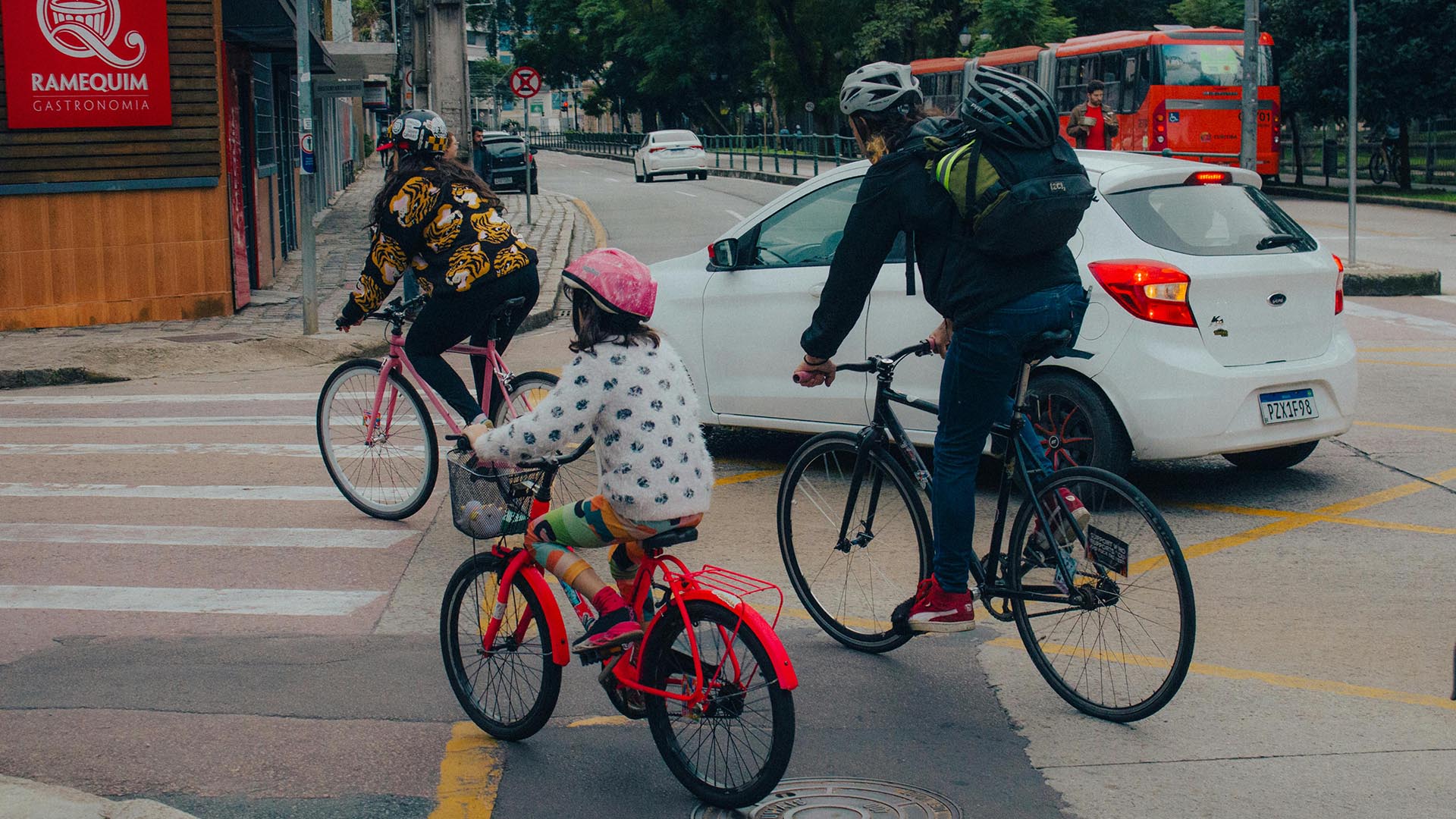
We’re taking the same approach with location and climate change; rather than trying to avoid all risk, we’re looking to leverage research, data, and climate projections to help you make the best choices for your future. As Alex Steffen discusses in When We Are:
It's true that there are no climate havens, if what we're seeking is a place where we don't have to think about climate change, or ecological collapse, or societal stress or discontinuity. You're not going to find that place because climate change is impacting every place there is.
But if what we mean to say is that no place is any safer than anywhere else, that's simply untrue. To say that there’s no place that’s any safer than a town on a coastal floodplain, or a desert city where it already hits 120 degrees in the summer, or a mountain town that's surrounded by a thousand acres of dried-out forests; anybody reasonable will say, “of course, there are places that are safer than that.”
And so really the question is one of degrees. It's one of saying, “how do we measure whether this place is safer than that?” And that’s a discussion that we can have differences in, but it only works if we acknowledge that relative safety exists.
We’re limited by radical uncertainties in our ability to say with definitiveness that “this place is the best.” But we don't have to have perfect prediction to be able to say, “this place looks, on the whole, better than that place.” In fact, we can say that now, and the tools that we're using are getting better and better every year.
We don't have to make the best decision; we just have to avoid the worst decisions.20
With that in mind, what risks can we mitigate through our choice of location, and what risks aren’t possible to avoid?
High Confidence
Our main goal in choosing a secure location is avoiding extreme weather and natural disasters, such as heat waves, droughts, wildfires, wildfires, hurricanes, and floods. We have high confidence in the data and modeling for these factors, but it’s important to get clear on what we mean by that.
Let’s use climate as an example; we can’t predict what the local weather will be like in Amarillo, TX in 2050, but we can state with confidence that average temperatures will be much hotter there than in Portland, ME. Likewise, we can’t predict when and where hurricanes will make landfall in 2030, but we can state with certainty that they’re more likely to impact the Gulf Coast than an inland state like Ohio. When it comes to disaster projections, we’re always looking at relative safety.
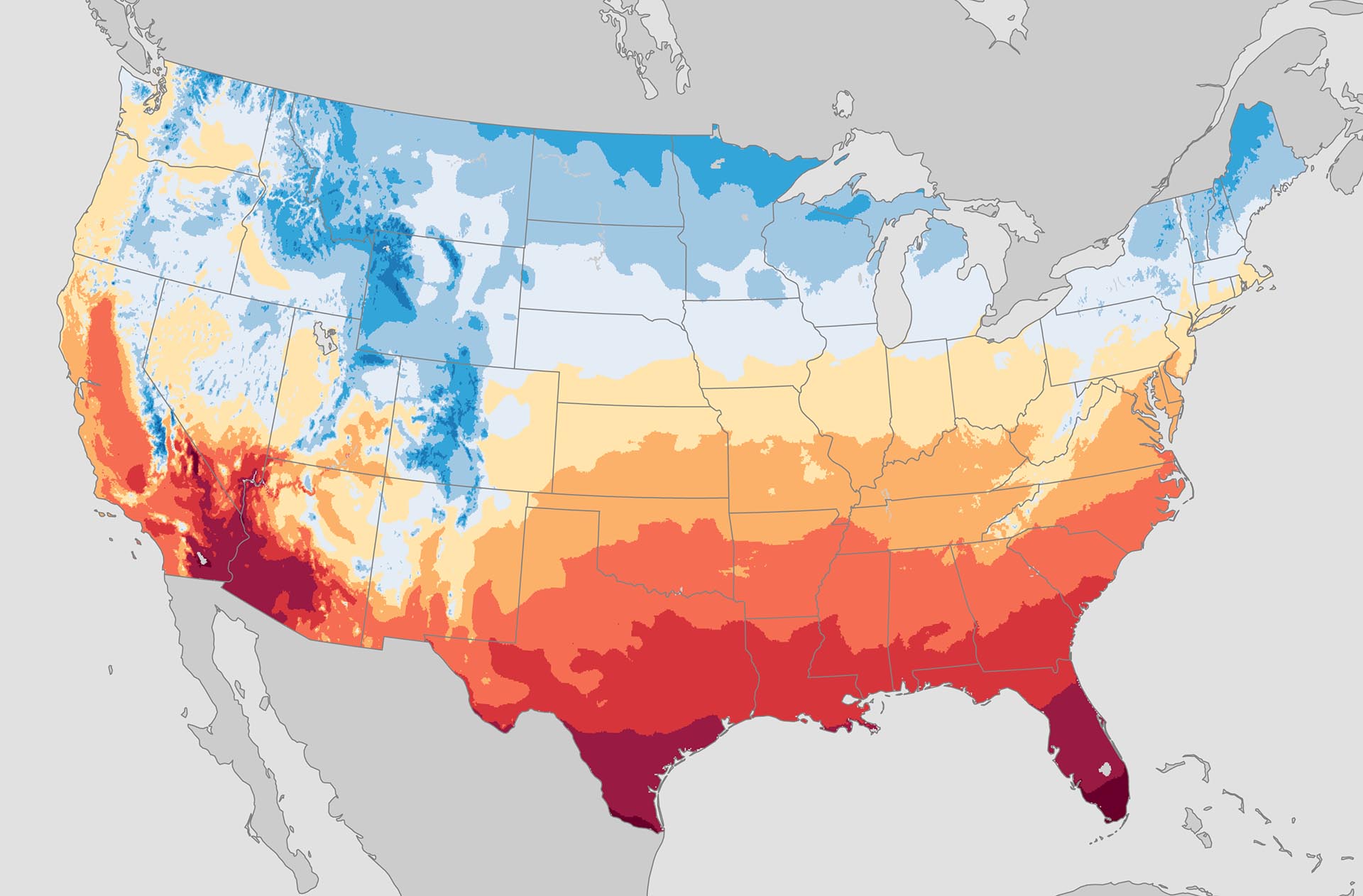
We have especially high confidence in projections of climate and temperature averages; models dating back as far as 1970 were able to accurately predict changes in global surface temperatures.21 Projections have continued to improve since then, accounting for more geophysical and socioeconomic factors.22
The past decade has seen a rapid expansion in disaster modeling and projection, largely due to advancements in computing and machine learning.23,24 Projections for floods and wildfires have greatly increased their spatial resolution and accuracy, while mapping tools like the National Risk Index are continually updated with new data each year.25,26,27,28 These projections, combined with common-sense principles in siting (avoiding coasts, riverbanks, floodplains, dry forests, and hot/arid regions) can help us avoid the worst of climate-fueled disasters.29
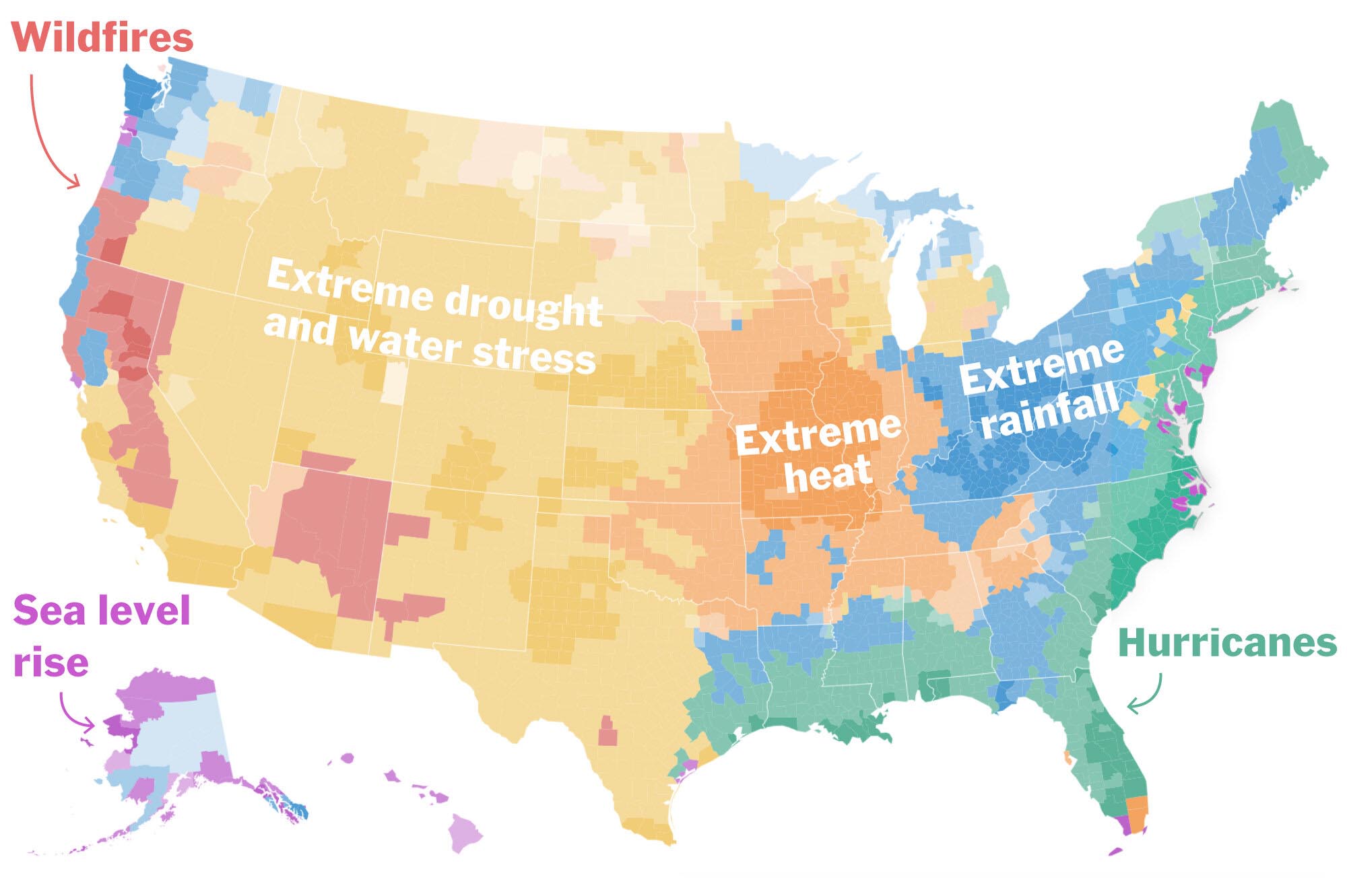
Remember that “low-risk” doesn’t mean “no risk;” even locations with a low propensity for disasters may experience outlier events.30 The 2021 Pacific Heat dome is a prime example; despite generally experiencing a mild climate, the Pacific Northwest was subjected to temperatures in excess of 120 °F over the course of a month.31 Despite that, we would recommend the Pacific Northwest over an area like the desert Southwest, parts of which are projected to experience over 120 days over 95 °F per year by midcentury.
Medium Confidence
Location provides less of a buffer against socioeconomic risks, such as economic downturns, energy crises, resource shortages, supply chain disruptions, and social unrest. For one, it’s difficult (if not impossible) to predict such events even on a national or global scale.32,33 Beyond that, there’s very little modeling on which regions of America would be most impacted by these events.
However, we can use historical examples to identify factors which provide resilience in the face of such crises. In the case of the pandemic, we found that states which combined a low population density with left-leaning politics (such as Vermont, New Hampshire, and Maine) had the lowest mortality rates.34,35 Large urban centers are generally hotspots for conflict and civil unrest, often due to economic disparity and social marginalization;36,37,38,39 they’re also more likely to become targets of terrorism.40,41 There have been attempts to project which states may be most resilient to economic recessions, but your career and financial resources play a bigger role than regional trends.44,45
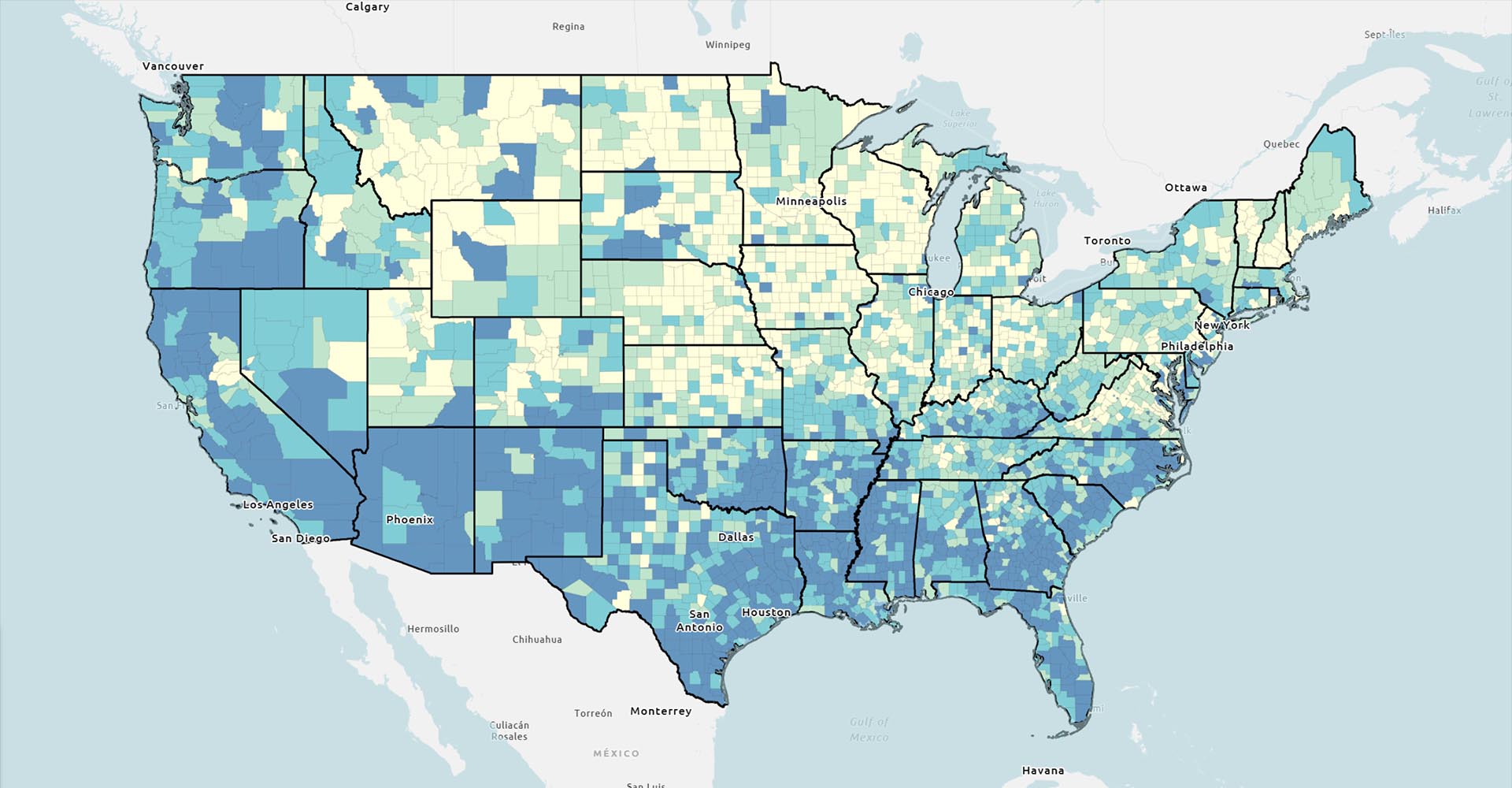
There are also several measures of social vulnerability and community resilience at the county and census-tract level, including the Social Vulnerability Index (CDC),46 Community Resilience Estimates (US Census),47 Baseline Resilience Indicators for Communities (USC),48 the Climate Vulnerability Index (EDF/Texas A&M),49 and the Climate Resilience Screening Index (EPA).50 While these can’t predict specific outcomes, they do provide a general sense for which regions are best able to recover from crises.
Low Confidence
Most risks for which location provides no recourse fall into the category of “total systemic collapse.” Whether the cause is ecological or societal, whether it’s due to runaway climate change, nuclear war, AI and novel technologies, an engineered virus, a supervolcano eruption, or an asteroid impact,51,52 once a certain level of disruption occurs, there’s no escaping it. We live in a globalized world dependent on long supply chains, complex systems coordination, and a constant input of high-energy fuel sources; should any of those cease to function, the effects will be immediate and far-reaching.53,54,55,56,57
We can safely assume that most people aren’t interested in persisting through a “doomsday” scenario; while that may be a morbid thought, it does provide some relief from needing to plan or prepare for such outcomes. Given the difficulty (and perhaps impossibility) of predicting these events, we don’t believe it’s prudent to dedicate our time and resources to apocalyptic futures.
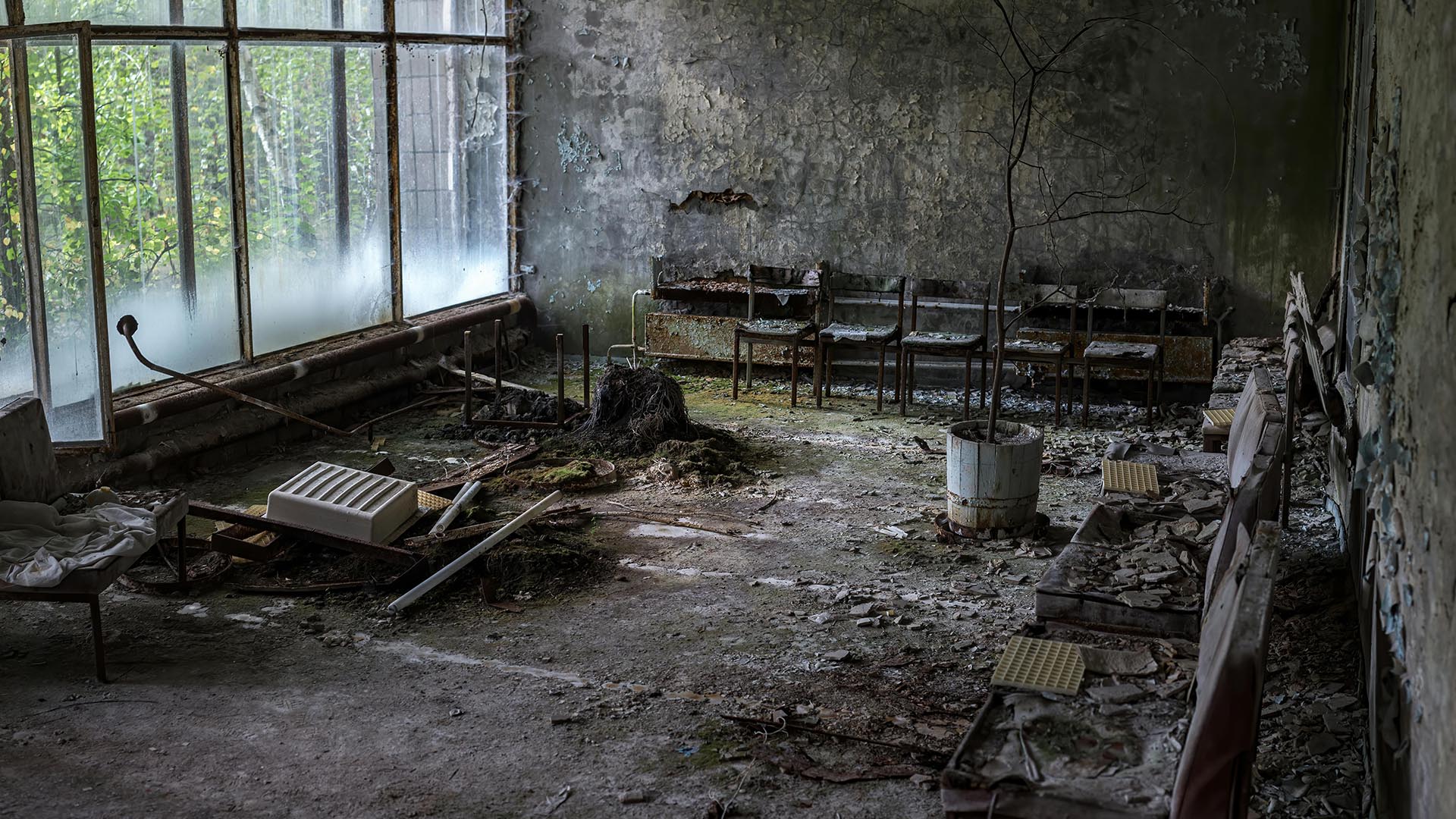
Another change from which location provides little buffer is a more gradual decline in energy, resources, prosperity, and standard of living, as predicted by The Limits to Growth (and its subsequent updates in 2002 and 2020).58,59
The data most aligns with the CT (comprehensive technology) and BAU2 (business as usual) scenarios which indicate a slowdown and eventual halt in growth within the next decade or so.
Both scenarios thus indicate that continuing business as usual, that is, pursuing continuous growth, is not possible. Even when paired with unprecedented technological development and adoption, business as usual as modeled by LtG would inevitably lead to declines in industrial capital, agricultural output, and welfare levels within this century.59
Thankfully we can take steps to prepare for such a future, as we outlined in our keys to surviving the future. By improving our health, lowering our consumption, developing our skills, and acquiring some essential resources, we can build resilience to all manner of crises. As John Michael Greer writes in Collapse Now and Avoid the Rush:
While it’s fashionable these days to imagine that this process will take the form of a sudden cataclysm that will obliterate today’s world overnight, all the testimony of history and a great many lines of evidence from other sources suggests that this is the least likely outcome of our predicament. Across a wide range of geographical scales and technological levels, civilizations take an average of one to three centuries to complete the process of decline and fall, and there is no valid reason to assume that ours will be any exception.
Individuals, families, and communities faced with this predicament still have choices left: to make the descent in a controlled way, beginning now, or to cling to their current lifestyles until the system that currently supports those lifestyles falls away from beneath their feet.
The skills, resources, and lifeways needed to get by in a disintegrating industrial society are radically different from those that made for a successful and comfortable life in the prosperous world of the recent past, and a great many of the requirements of an age of decline come with prolonged learning curves and a high price for failure.
Starting right away to practice the skills, assemble the resources, and follow the lifeways that will be the key to survival in a deindustrializing world offers the best hope of getting through the difficult years ahead with some degree of dignity and grace.60
Thankfully these steps don’t involve much in the way of self-sacrifice; research (as well as our own experience) has confirmed that lowering our material consumption and living more sustainably almost always leads to greater happiness and wellbeing.61,62
The Role of Location
Location isn’t a magic bullet; it’s just one tool in our kit for building resilience. We can lower our exposure to risk through careful selection of our region and homesite, but preparing for the future requires a holistic approach. That’s what we’re advocating for in our guides, and with all the resources on this site.
So when you hear the term “climate haven,” pay attention to the context. Is it being used as an excuse to justify escapism, nihilism, and business as usual? Or is it part of a more nuanced discussion around risk and resilience? We hope it’s the latter, and that this post helps you discern that.
Footnotes & References
- US cities are advertising themselves as 'climate havens'. But can they actually protect residents from extreme weather? (Mike De Socio, BBC Future)
- Buffalo Niagara as a Climate Change Refuge (Be in Buffalo)
- Michigan is a Climate Haven in a Warming World. Will Everyone Move Here? (Sheri McWhirter, Lindsay Moore, Council of the Great Lakes Region)
- There were never any climate havens: floods in the midwest, hurricanes in Appalachia (Alexandra Tempus, The Guardian)
- There Is No Climate Haven. We All Live in Florida Now. (Margaret Renkl, The New York Times)
- Is the idea of a ‘climate haven’ under water? (Bob Henson, Yale Climate Connections)
- The super-rich ‘preppers’ planning to save themselves from the apocalypse (Douglas Rushkoff, The Guardian)
- Inside Mark Zuckerberg’s Top-Secret Hawaii Compound (Guthrie Scrimgeour, WIRED)
- Billionaires emit more carbon pollution in 90 minutes than the average person does in a lifetime (Oxfam)
- Billionaire ‘pollutocrats’ are driving the climate crisis – and with it inequality, hunger and heat-related deaths (Nafkote Dabi, London School of Economics and Political Science)
- Accelerationism: how a fringe philosophy predicted the future we live in (Andy Beckett, The Guardian)
- The Intentional Collapse (Douglas Rushkoff)
- There Is No Such Thing as a Climate Haven (Scientific American)
- Asheville has been called a ‘climate haven.’ There’s no such thing (Adele Peters, Fast Company)
- Safest Places to Live in the U.S. (U.S. News)
- Helmets for preventing head and facial injuries in bicyclists (Diane Thompson, Fred Rivara, Robert Thompson, The Cochrane Database of Systematic Reviews)
- Bicycle injuries and helmet use: a systematic review and meta-analysis (Jake Olivier, Prudence Creighton, International Journal of Epidemiology)
- Effectiveness of bicycle helmets and injury prevention: a systematic review of meta-analyses (Carlson Moses Büth, Natalia Barbour, Mohamed Abdel-Aty, Scientific Reports)
- Bicycle Helmet Ratings (Virginia Tech)
- Why do some people want you to ignore climate threats? (Alex Steffen, When We Are)
- Evaluating the Performance of Past Climate Model Projections (Zeke Hausfather, Henri Drake, Tristan Abbott, Gavin Schmidt, Geophysical Research Letters)
- Analysis: How well have climate models projected global warming? (Zeke Hausfather, Carbon Brief)
- How AI Is Changing Our Approach to Disasters (Patrick Roberts, RAND)
- Harnessing Emerging Technologies for Disaster Risk Reduction (World Meteorological Organization)
- The Data Behind Flood Factor (First Street)
- A 30 m Global Flood Inundation Model for Any Climate Scenario (Oliver Wing, Paul Bates, Niall Quinn, James Savage, Peter Uhe, Anthony Cooper, Thomas Collings, Nans Addor, Natalie Lord, Simbi Hatchard, Jannis Hoch, Joe Bates, Izzy Probyn, Sam Himsworth, Josué Rodríguez González, Malcolm Brine, Hamish Wilkinson, Christopher Sampson, Andrew Smith, Jeffrey Neal, Ivan Haigh, Water Resources Research)
- The Data Behind Fire Factor (First Street)
- National Risk Index for Natural Hazards (FEMA)
- A Dozen Dangers: The 12 climate risks that threaten our homes (Ethan Fletcher, Climate Change and Your Home)
- Global emergence of regional heatwave hotspots outpaces climate model simulations (Kai Kornhubert, Samuel Bartusek, Richard Seager, Hans Joachim Schellnhuber, Mingfang Ting, PNAS)
- 2021 Western North America heat wave (Wikipedia)
- The Black Swan (Nassim Nicholas Taleb)
- Why Are Recessions So Hard to Predict? Random Shocks and Business Cycles (Thorsten Drautzburg, Federal Reserve Bank of Philadelphia)
- Assessing COVID-19 pandemic policies and behaviours and their economic and educational trade-offs across US states (Thomas Bollyky, Emma Castro, Aleksandr Aravkin, Kayleigh Bhangdia, Jeremy Dalos, Erin Hulland, et al., The Lancet)
- Study: Vermont ranks best in Covid-19 response (Othering and Belonging Institute)
- Pandemic and social protests: cities as flashpoints in the COVID-19 era (Eva Garcia Chueca, Francesc Teodoro, CIDOB)
- Mapping Civil Unrest in the United States (Nick Routley, Visual Capitalist)
- Urban growth, resilience, and violence (Emma Elfversson, Kristine Höglund, Current Opinion in Environmental Sustainability)
- Marginalization and Riots: A Rationalistic Explanation of Urban Unrest (Markus Holdo, Bo Bengtsson, Housing, Theory and Society)
- Urban U.S. counties hot spots of terror, but rural areas are not exempt (Jessica Rivinius, START)
- Assessing Risk of Terrorist Acts by Looking at Location Data and Demographic and Social Characteristics (National Institute of Justice)
- The least (and most) likely states to survive a recession (National Business Capital)
- These States Are Least Prepared for a Recession (Elizabeth Guevara, Investopedia)
- Which Industries Are Recession-Proof? Careers That Weather Economic Downturn (Becca van Sambeck, University of Southern California)
- Which Industry Sectors Are the Most Recession-Proof? (Sean McKenna, Luth Research)
- Social Vulnerability Index (CDC)
- Community Resilience Estimates (US Census)
- Baseline Resilience Indicators for Communities (University of South Carolina)
- The U.S. Climate Vulnerability Index (The U.S. Climate Vulnerability Index)
- Development of a Climate Resilience Screening Index (James Kevin Summers, EPA)
- Global Catastrophic Risk Assessment (Henry Willis, Anu Narayanan, Benjamin Boudreaux, Bianca Espinosa, Edward Geist, Daniel Gerstein, Dahlia Anne Goldfeld, Nidhi Kalra, Tom LaTourrette, Emily Lathrop, Alvin Moon, Jan Osburg, Benjamin Lee Preston, Kristin Van Abel, Emmi Yonekura, Robert Lempert, Sunny Bhatt, Chandra Garber, Emily Lawson, Homeland Security Operational Analysis Center)
- Global Catastrophic Risks 2026 (Global Challenges Foundation)
- Are the Risks of Global Supply Chains Starting to Outweigh the Rewards? (Willy Shih, Harvard Business Review)
- Why global supply chains are so fragile (PJ Byrne, DCU Business School)
- How Much Energy Will the World Need? (W. Wayt Gibbs, Anthropocene Magazine)
- What energy levels can the Earth sustain? (Patrick Moriarty, Damon Honnery, Energy Policy)
- Progress trap (Wikipedia)
- A Synopsis: Limits to Growth: The 30-Year Update (Donella Meadows, Jørgen Randers, Dennis Meadows, Academy for Systems Change)
- Update to limits to growth (Gaya Herrington, Journal of Industrial Ecology)
- Collapse Now and Avoid the Rush (John Michael Greer, Resilience.org)
- Reducing without losing: Reduced consumption and its implications for well-being (Ruth Mugge, Carina Thürridl, Willemijn van Dolen, Sustainable Production and Consumption)
- Going Green Is Good for You: Why We Need to Change the Way We Think about Pro-environmental Behavior (Michael Prinzing, Ethics, Policy & Environment)

