
2,700 words / 11 min. Read
If you’ve spent some time on this site, you’ve probably heard the word “resilience” at least a dozen times; it’s the core theme that we’re working towards with all of our resources.
Since it’s such a central concept, it’s important to get clear on what resilience means. We like this simple definition from the Stockholm Resilience Centre:
Resilience is the capacity of a system, be it an individual, a forest, a city or an economy, to deal with change and continue to develop.1
And this one from Probable Futures, which ties in climate change:
Resilience generally describes how well we withstand challenges and recover afterwards. For example, a resilient immune system can help you prevent severe illness and physically recover faster if you do get sick.
When climate hazards happen, the more climate resilient we are, the less damage occurs, the better we can cope, and the faster we can recover. Climate resilience can help us live more comfortably with climate change and improve our climate adaptation approaches.2
Resilience applies to systems at every scale; from our cells and bodies3 to our families, friends, cities, and nations, all the way up to our global civilization and biosphere. Each of these is facing threats from climate change; as conscious individuals, we have the ability to direct our time, energy, and resources towards strengthening these systems.

So how can we work to build climate resilience, both personally and collectively? In this post, we’ve identified 7 principles which expand our ability to weather crises:
1. Decentralization
2. Diversity
3. Redundancy
4. Capacity
5. Elasticity
6. Feedback
7. Transformation
For each principle we’ll explore the definition and theory, along with real-world examples so you can integrate them into your life.
This is a condensed version of our series on climate resilience; if this resource is helpful for you, you can find the full version here.
1. Decentralization
Decentralization is the process of dispersing functions and powers away from a central location or authority.4 This is in contrast to centralization, where information and power is vested in a single person or place.5
By definition, centralized systems have a single point of failure, and require that decisions go through a chain of command;6 in contrast, decentralized systems are able to respond with more immediacy, and are more resilient to total collapse.7 We see decentralization at work in technologies like the internet,8 the blockchain,9 and federated social networks,10 and everywhere in nature from cells to ecosystems.11
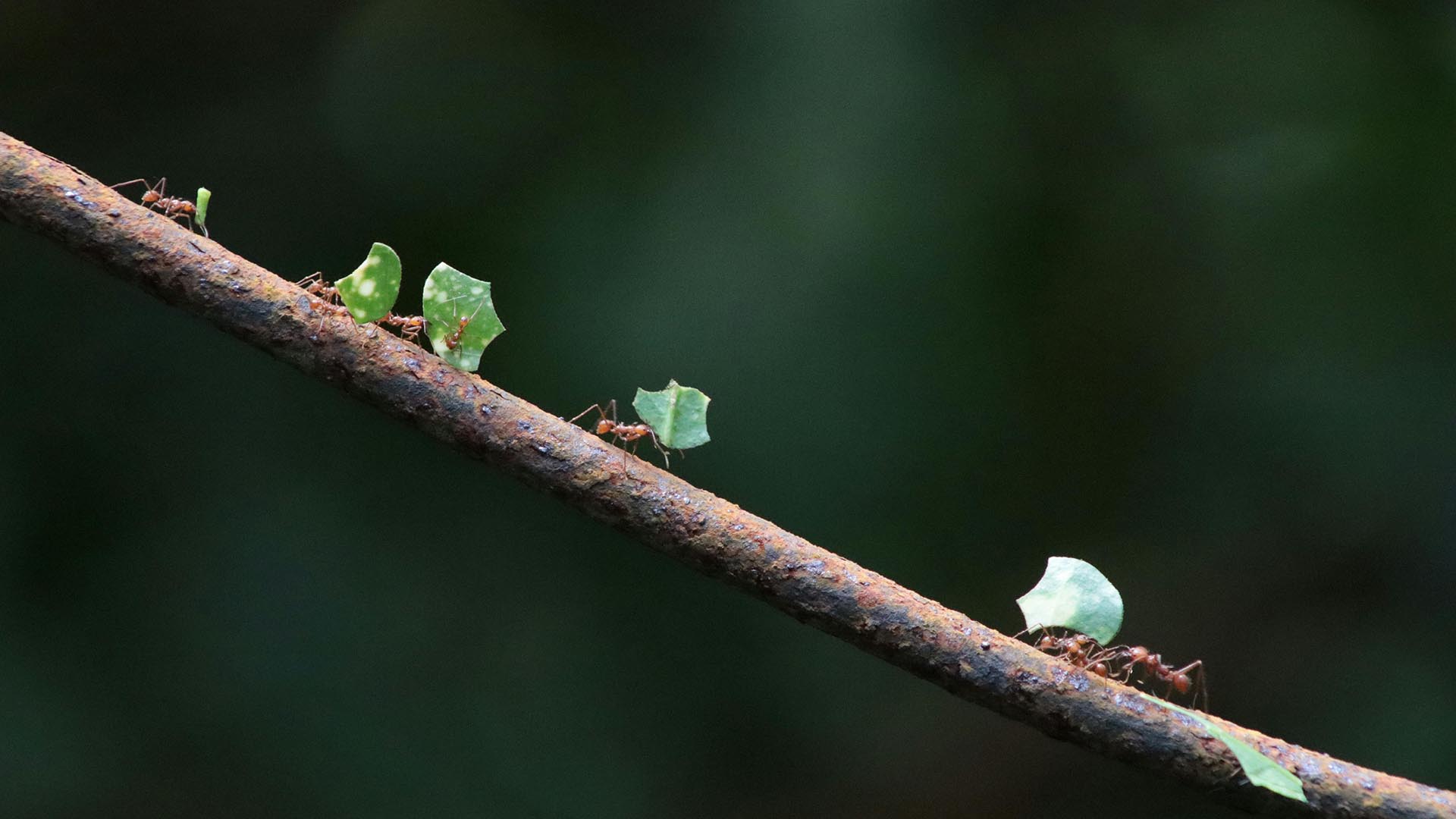
Ant colonies are a famous example of decentralized systems in nature. Though each individual ant only processes a small amount of information, it’s able to take direct cues from its environment and respond accordingly.12 As a result, the colony is able to carry out sophisticated tasks such as foraging, allocating resources, relocating to new environments, and defending from threats.13,14 The resilience of ants can’t be overstated; they’ve been around for over 140 million years, have survived 5 mass extinction events, and currently outnumber humans by 2.5 million to one.15,16,17
As an individual, the best way to decentralize a system is to become more self-reliant. Our power grid is mainly built around centralized generation, where large-scale power plants supply energy for thousands of homes.18 But if extreme weather damages a transmission line, all those households go dark.19 Small-scale, renewable energy generation (such as rooftop solar) keeps the lights on when a line goes down, making us less reliant on the grid.20
That same logic can be applied to other areas of our life, such as food production, transportation, manufacturing of household goods, and policymaking. The more responsibility and autonomy we can take on as parts within a system, the more resilient that system becomes.21
2. Diversity
Diversity is a measure of variation within a system. In nature, biodiversity is the measure of species variation in an ecosystem.22 In sociology, we use diversity to refer to differences in age, gender, ethnicity, and sexual orientation;23 in finance, diversification is the investment of funds into different asset classes.24
Across all these fields, a key attribute of diversity is that it increases the ways in which a system can respond to disruption. Where decentralization removes a single point of failure, diversity removes a single mode of failure.
Industrial agriculture is based around monocultures, or large areas of land dedicated to a single crop (such as wheat, corn, or soybeans).25 Monocultures are more efficient to plant and harvest, but this lack of diversity leaves crops more vulnerable to diseases, pests, and extreme weather.26
By contrast, historic agriculture often made use of polycultures, or mixed plantings of complementary species.27 Weather that’s unsuitable for one crop might cause another to flourish, while diverse plant species bring in natural predators to control pests.28 As such, polycultures are more resilient to extreme weather and climate change.29

How can we increase our own resilience with diversity? To start, we can expose ourselves to ideas and perspectives that challenge our expectations.30 Rather than getting stuck in a routine, introduce some variation in your day, from diet and exercise to the places you spend your time.31 Look for opportunities to engage with people from different backgrounds, and work to cultivate diversity in your friendships, workplace, and community.32,33
Diversity gets us out of our comfort zone, and it’s both challenging and rewarding. Look for opportunities to bring more diversity into your life, and see how it changes your perspectives.
3. Redundancy
Redundancy is the intentional duplication of critical components of a system.34 As the saying goes, “two is one, and one is none.”35
For some the word might have negative connotations, like “unnecessary” or “extraneous.” But if we’re looking to build resilience, redundancy is essential. From airplanes and submarines to bridges and power plants, mission-critical infrastructure relies on redundancy to insure against failure.36
We see redundancy at work in nature on all scales, from genes and cells on through to populations and ecosystems.37,38 Human bodies have two eyes, four limbs, two kidneys, two lungs, two brain hemispheres and overlapping networks of veins and neurons; as such, we have a remarkable ability to survive and thrive through severe injury and loss.39,40
Redundancy often finds itself at odds with efficiency, and in a society that’s focused on speed and optimization, redundancy tends to fall by the wayside.41 We saw this during the COVID pandemic, when “just-in-time” supply chains proved highly vulnerable to disruption.42,43 We also see this in automotive and appliance manufacturing, where complex software and electronics have added points of failure that didn’t exist in simpler designs.44,45

When applying redundancy to your life, look at critical functions first. Do you have backup reserves of food, water, and fuel? Do you have a means of producing those yourself (rainwater harvesting, gardens, firewood, solar panels) if stores run out? Do you have other ways to earn income if you lose your primary job?
Is your town or city dependent on a single employer or industry, or does it have multiple revenue sources? Is it surrounded by local farms, or does it rely on imported food? Does it have good transit alternatives (bike paths, bus service) or are cars the only viable option?
Wherever you have a need, make sure you have multiple ways to meet it.
4. Capacity
Capacity is the ability of a system to absorb an influx of energy.46 That might mean physical energy, such as the heat our atmosphere and oceans are absorbing due to climate change,47 or it might mean a deluge of elements, such as wind and rain from a hurricane. It could refer to an influx of resources, such as a financial windfall, or an increase in the population of a city or region.48
Regardless of what form it takes, a sudden influx often disrupts and unbalances a system; without the capacity to hold it, systems degrade or collapse.
Consider how cities and forests receive rainfall. A forest acts like a natural sponge; its canopy deflects and disperses rain as it falls, softening its impact; it’s then absorbed by the soil, which can hold vast amounts of water.49,50 By contrast, the hard, impermeable surfaces of cities are unable to hold or absorb water, which greatly increases the risk of flash floods during extreme rainfall.51,52 Low capacity leads to low resilience; if it can’t handle a surge, the system becomes overwhelmed.

Capacity comes in many forms. On a personal level, we have physical capacity: how long can we push ourselves before fatigue?53 Emotional capacity: can we tolerate and process uncomfortable feelings?54 Can we manage stress, and remain clearheaded during a crisis? Financial capacity: can we responsibly steward resources when we receive an abundance of them?55
On a larger scale, how many people can our town or city sustainably house? What population density can we support before resource pressures mount? Can we increase the carrying capacity of our region without degrading the environment?
We build capacity by finding our limits, and stretching just a little bit past them. At every scale, look for ways to increase your capacity, and that of the environment around you.
5. Elasticity
Elasticity is a system’s ability to stretch and return to its baseline.56 Think of bending a branch, or squeezing a stress ball; it deforms under pressure, then springs back to its original shape once pressure is released. This is in contrast to plasticity, where an object remains in a deformed state.57
Elasticity can take many forms; our joints and tendons flex and contract physically,58 and we can be cognitively, emotionally, and behaviorally flexible as well.59 We use elasticity in economics to refer to flexibility in supply and demand.60 As they say, “it’s better to bend than to break.”61
Our ability to process grief demonstrates our personal elasticity. When we’re faced with a deep loss, we’re thrown out of balance; our routines fall by the wayside as we’re consumed by our emotions.62 And yet we realize that this state won’t last forever; it’s a natural response to loss, and a means of healing from our experience.63
Over time, we return to our daily rhythms and to a more regulated emotional state. We haven’t forgotten the source of our loss, but we’re able to remember it without being consumed by sadness.

On the other hand, if we’re inflexible and unwilling to allow those emotions to surface, we avoid and repress them, leaving us stuck and unable to move past our loss.64 Rigidity is detrimental to our wellbeing, and prevents us from adapting to the challenges of life.65
Can you compromise in pursuit of a greater goal? Can you endure temporary hardship until things improve? Can you determine what’s in your power to affect, and what’s outside your control? Can you accept things as they are, even as you work to change them?
Elasticity doesn’t mean abandoning our values or personality; it’s a means of maintaining our core identity under pressure.
6. Feedback
Feedback is the ability of a system to respond to its environment.66 It allows us to adjust to our circumstances and maintain equilibrium in the face of changing conditions.
In most cases, feedback acts as a stabilizing mechanism; our bodies use feedback to maintain homeostasis, by regulating our temperature, fluids, and blood sugar.67,68 The same principles are at work in mechanical and electrical systems (such as in thermostats)69,70 all the way up to our global economy (such as with market corrections).71
Feedback can also become destabilizing, when outputs are fed back into themselves in a self-perpetuating process.72 We see this everywhere from sound systems (such as when a speaker feeds back into a microphone)73 to our atmosphere, where runaway feedback loops could trigger dramatic and irreversible changes in climate.74 If a system can’t temper its feedback, it’s pushed out of equilibrium.
Consider fluctuating populations of predators and prey; when plants are abundant, populations of herbivores grow in response; this in turn leads to growth in predator populations.75 Each acts as a regulating feedback on the other; herbivores manage plant populations, carnivores manage herbivore populations, and all trophic levels eventually reach a balanced state.76

As individuals, how can we use feedback to build resilience? The first step is awareness. Take in information from your surroundings; the weather, plants and animals, the people around you, the news, the economy. How are conditions changing? How is your environment responding?
Can you modify your habits, patterns, and goals, or do you find yourself resistant to change? Can you course-correct when things go poorly? Can you implement constructive criticism? Can you invest more deeply in the things that are serving you?
Feedback allows us to emerge from adversity with greater understanding. Take feedback with discernment, and adjust accordingly.
7. Transformation
Transformation is the ability of a system to change its fundamental character.77 That could be electricity turning into heat,78 a caterpillar turning into a butterfly,79 a desert turning into a forest, a business pivoting to a new offering, or an individual changing their life path.
Elasticity allows us to spring back, but we can’t always return to our baseline. Feedback nudges us to make course corrections, but sometimes that’s not enough. When our way of being is no longer viable, transformation offers us a second chance, as long as we’re open to deeper change.
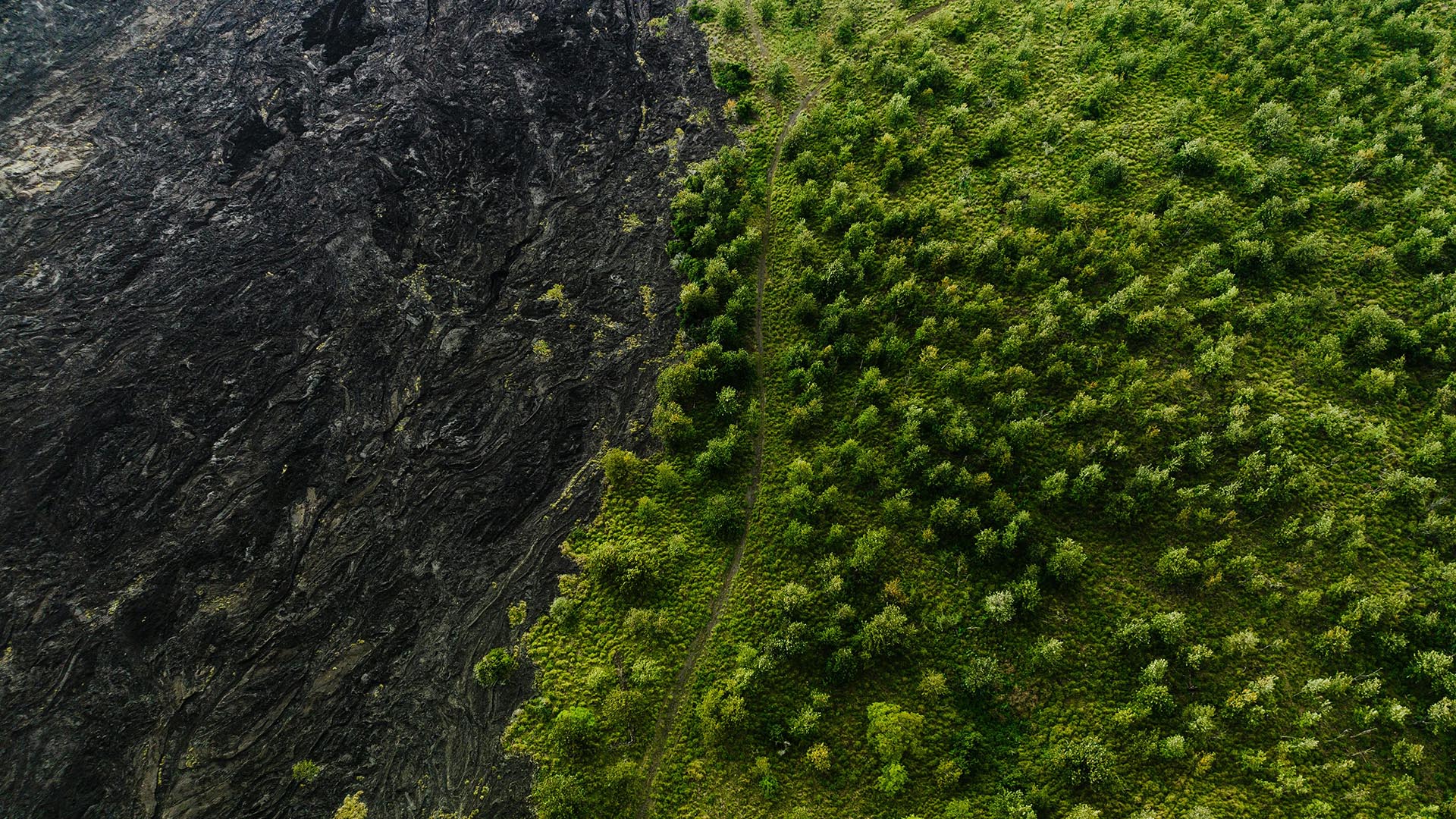
Consider the process of ecological succession, where the landscape and species of an area changes dramatically over time.80 From lava fields to construction lots, succession starts with a disturbance; first, bare earth is claimed by “pioneer species” like grasses, which give way to woody species like shrubs, and eventually a “climax community,” such as a forest.81 This remains in place until another disturbance restarts the succession process. Transformation isn’t final; it’s a continual process of change.
Humans have been transforming our natural environment for thousands of years; now climate change is forcing us to transform in turn.82 We’ve built a globe-spanning society almost entirely with fossil fuels, in the process destabilizing the atmosphere and Earth systems which we depend on to survive.83,84 Staying the course will leave us with a degraded and depleted planet that can no longer support a thriving civilization.85
Can we transcend the multi-polar traps that led us to this point, and unite around a common goal?86 Can we abandon the pursuit of limitless growth, and direct our resources to meet the needs of all beings on Earth?87 Our ability to transform will ultimately determine the fate of our species.
Conclusion
As we work to develop climate resilience in our lives, we become seeds for change. The world needs resilient individuals to weather the challenges of the coming years, whether that’s helping to lower our ecological footprint, developing sustainable ways of meeting our needs, building lifeboat communities,88 or spearheading shifts in our governments and economies.
Buckminster Fuller used the metaphor of a “trim tab” - a small component of a ship’s rudder with the power to direct the entire vessel - to illustrate the effect that individuals can have on their society:89
A trim tab is the tiny, trailing part of a ship’s rudder. Slight pressure on the trim tab moves the rudder, which in turn directs the ship. We are all trim tabs, tiny pivots affecting the overall direction of humanity.
As Fuller advised, it’s time to take a long view. Zoom out, look at where we’ve been and where we might be going. See it? Now choose your path and act accordingly. You don’t have to turn the weight of civilization, but you can be a trim tab and be part of the turning.
In this era of discouraging world news and a sense of futility, what we do and say counts. Our ordinary days of living are filled with opportunities to influence the lives of another. It doesn’t matter if it is at the grocery store, the ballot box or in the chemo chair. The second we are interacting with another we are "trim tabs." For better or for worse.90
We hope these keys help you cultivate more resilience in your life, and that this in turn steers us towards a more sustainable future.

Footnotes & References
- What is resilience? (Stockholm Resilience Centre)
- Climate resilience: what it is and how to build it (Nabig Chaudhry, Probable Futures)
- Rising CO₂ levels are reflected in human blood. Scientists don’t know what it means (Alexander Larcombe, Philip Bierwirth, The Conversation)
- Decentralization (Wikipedia)
- Decentralised system (Wikipedia)
- Centralized Management (Academy to Innovate HR)
- Decentralized system (Computer Hope)
- The Decentralized Web: Defending Internet Freedom through Decentralization (MIT Digital Currency Initiative)
- What is blockchain? (Stephanie Susnjara, Ian Smalley, IBM)
- Disrupting Networks: Decentralization and the Fediverse (Karen Emslie, Communications of the ACM)
- How nature organizes itself, from brain cells to ecosystems (MIT)
- Ant brain complexity at a cellular level revealed for the first time using single cell technology (Phys.org)
- Ant Colonies Respond Quickly to Distribute Food (The Biomimicry Institute)
- How Ants Respond to Predators Suggests Superorganism Capabilities (Eben Bein, NOVA)
- Ants are surprisingly ancient, arising 140-168 million years ago (Steve Bradt, The Hardvard Gazette)
- What are mass extinctions, and what causes them? (Michael Greshko, National Geographic)
- Ants, facts and information (National Geographic)
- Centralized Generation of Electricity and its Impacts on the Environment (EPA)
- How Texas’ power grid failed in 2021 (Mandi Cai, Erin Douglas and Mitchell Ferman, The Texas Tribune)
- Decentralization and the Energy Transition (John Cooper, EEPower)
- Decentralizing for a Deeper, More Supple Democracy (Jean-Paul Faguet, Ashley Fox, Caroline Pöschl, Journal of Democracy)
- biodiversity (Britannica)
- What is diversity, equity, and inclusion? (McKinsey & Company)
- What Is Diversification? (Tiffany Lam-Balfour, Chris Hutchison, NerdWallet)
- Advantages and disadvantages of growing a monoculture (mpetracchi, The University of Massachusetts)
- Monoculture of crops: A challenge in attaining food security (Sandeep Kaur, Mandeep Bedi, Simran Singh, Navdeep Kour, Sandip Singh Bhatti, Astha Bhatia, Manish Kumar, Ravinder Kumar, Advances in Food Security and Sustainability)
- The Indigenous Origins of Regenerative Agriculture (Tracy Heim, National Farmers Union)
- Feed grain polycultures mitigate weather risk, support arthropods, and suppress weeds in the Western Corn Belt (Dhurba Neupane, Shannon Osborne, Karl Roeder, Avery Knoll, Patrick Ewing, Agriculture, Ecosystems & Environment)
- Ancient farming strategy holds promise for climate resilience (Susan Kelley, Cornell Chronicle)
- Your powerful, changeable mindset (Mia Primeau, Stanford Report)
- Is Your Workout Routine Too Predictable? (Hannah Singleton, The New York Times)
- How Diversity Makes Us Smarter (Katherine Phillips, The Greater Good Science Center)
- Why We Need Diversity in Our Friendscapes (Suzanne Degges-White, Psychology Today)
- Redundancy (engineering) (Wikipedia)
- Two is One, One is None: A Discussion on Redundancy (Marion Whatley, NASA)
- An Introduction to the Mental Model of Redundancy (Farnam Street)
- Understanding redundancy and resilience (Philip Hunter, EMBO Reports)
- Does functional redundancy affect ecological stability and resilience? (Christopher Biggs, Lauren Yeager, Derek Bolser, Christina Bonsell, Angelina Dichiera, Zhenxin Hou, Spencer Keyser, Alexis Khursigara, Kaijun Lu, Arley Muth, Benjamin Negrete Jr., Brad Erisman, Ecosphere)
- Understanding limb loss and navigating life as an amputee (Alyssa Hunt, Loma Linda University Health)
- Patients Missing One Brain Hemisphere Show Surprisingly Intact Neural Connections (Whitney Clavin, Caltech)
- Why Redundancy is Better Than Efficiency (Rachel Quednau, Strong Towns)
- Rethinking Your Just-in-Time Supply Chain (The University of Pennsylvania)
- The Balance of Redundancy and Efficiency in a Resilient Supply Chain (Rosario Landa, 7th EAI International Conference on Computer Science and Engineering in Health Services)
- Chasing Reliability In Automotive Electronics (Semiconductor Engineering)
- A Tiny Part’s Big Ripple: Global Chip Shortage Hobbles the Auto Industry (Jack Ewing, Neal Boudette, The New York Times)
- capacity (Merriam-Webster)
- Why is the ocean so important for climate change? (Kathryn Tso, Stephanie Dutkiewicz, MIT)
- Carrying capacity (Wikipedia)
- The Role of Trees and Forests in Healthy Watersheds (Vincent Cotrone, Pennsylvania State University)
- From Forests to Faucets: Where does your drinking water come from? (Jennifer Moore Myers, Sarah Farmer, US Forest Service)
- No More Pavement! The Problem of Impervious Surfaces (Lakis Polycarpou, Columbia Climate School)
- Impervious Surfaces and Stormwater Impacts (Beth Yount, Pennsylvania State University)
- Physical Capacity (ScienceDirect)
- Emotional Capacity (CAST)
- Financial Capacity (ScienceDirect)
- Elasticity (physics) (Wikipedia)
- Plasticity (physics) (Wikipedia)
- Flexibility (UC Davis Sports Medicine)
- The Art of Flexibility, Resilience, and Adaptability (Padraic Gibson, Psychology Today)
- Elasticity (economics) (Wikipedia)
- better bend than break (TheFreeDictionary)
- 5 stages of grief: Coping with the loss of a loved one (Jennifer Fisher, Stephanie Collier, Harvard Medical School)
- How Embracing Grief Can Help Us Heal and Grow (Kerry Tobin, Psychology Today)
- Chapter 10 - Cognitive and emotional flexibility (Steven Southwick, Dennis Charney, Cambridge University Press)
- The Relationship Between Psychological Inflexibility and Well-Being in Adults (Clarissa Ong, Abigail Barthel, Stefan Hofmann, Behavior Therapy)
- Feedback (Wikipedia)
- Homeostasis and Feedback (Suzanne Wakim, Mandeep Grewal, Butte College)
- Homeostasis and Feedback Loops (SUNY OER Services)
- Concepts: Feedback (Yaneer Bar-Yam, New England Complex Systems Institute)
- Feedback Systems (ElectronicsTutorials)
- Mental Model: Feedback Loops (Farnam Street)
- Runaway Feedback: The Science of Self-Amplifying Systems (Bohrium)
- Audio feedback (Wikipedia)
- Climate Feedback Loops and Tipping Points (UCAR)
- Predator-Prey Dynamics: Lotka-Volterra (Monica Beals, Louis Gross, Susan Harrell, University of Tennessee)
- Dynamics of Predation (Alison Stevens, Nature Education)
- transform (Merriam-Webster)
- Electric heating (Wikipedia)
- Metamorphosis (Wikipedia)
- Ecological succession (Wikipedia)
- Ecological succession, explained (Max Witynski, University of Chicago)
- Humans began altering natural world 6,000 years ago (Robert Sanders, UC Berkeley)
- Global primary energy consumption by source (Our World in Data)
- Planetary boundaries (Stockholm Resilience Centre)
- Update to limits to growth (Gaya Herrington, Journal of Industrial Ecology)
- Eudaimonics: The Art of Realizing Genuinely Good Lives (Umair Haque, Eudaimonia & Co)
- Daniel Schmachtenberger on The Superorganism and Multipolar Traps (Daniel Schmachtenberger, Nate Hagens, The Great Simplification)
- Where are the lifeboat communities? (John Michael Greer, Resilience.org)
- Thinking like a Trimtab (Buckminster Fuller Institute)
- You Are a Trim Tab (Trudy Boyle, Rabbi Rami Shapiro, Living Well with Illness)

